README

About
This is a fan-made Tabletop RPG content add-on based on Touhou Project. It’s compatible with D&D One (also known as 5.5e or 2024e) books and SRD 5.2 (CC-BY licensed subset of D&D One), and doesn’t include full rules.
If you don’t already have core rules, you can:
- Get a free copy of SRD (PDF) at https://www.dndbeyond.com/srd;
- Read any web version, like mine at https://mailbun.codeberg.page/dnd-srd5.2-mdbook/.
You don’t need Species, Subclasses, Backgrounds, etc. from official books to play this add-on.
If you need more information about Touhou Project, you are encouraged to read Touhou Wiki at https://en.touhouwiki.net/wiki/Touhou_Wiki.
Repository
If you wish to read from source .md files for latest in-development version, continue to the SUMMARY.md for Table of contents.
Otherwise, check the Web version.
If you want to know how to contribute, check Contributing.md.
Links
This project will be updated over time.
Check the latest version at:
- https://mailbun.codeberg.page/touhou-dnd - Web version
- https://mailbun.itch.io/touhou-dnd - Downloadable version and community forum
Or get involved:
- https://codeberg.org/mailbun/touhou-dnd - Source files, next update progress
- https://translate.codeberg.org/projects/touhou-dnd/book/ - Translation
Core Gameplay Changes
Misc changes
- Monstrosity creature type is renamed to Youkai, and all Fiend creatures are considered Youkai for effects that require it.
Spell Card Combat
In Gensokyo, Spell Card duels are a normal way of resolving conflicts. In-universe, they were enacted by Hakurei Reimu (though it’s implied that they were drafted by a youkai, and they are enforced by Gensokyo Sages) as a way to make battles between Youkai and Humans more fair.
General Rules
Spell Card Battle rules are an in-universe explanation of game mechanics, so they usually follow the normal rules of combat, with some changes, like Spell Cards, Armor Class and Dropping to 0 Hit Points.
In-universe, they regulate how battles (duels) happen, though it’s described vaguely, and only original draft was fully shown in Perfect Memento of Strict Sense official encyclopedia (see English translation on Touhou Wiki). Full version is only summarized in an article about Hakurei Reimu (also English translation).
Breaking Spell Card rules usually means consequences, including many youkai potentially getting permission to hunt you down and a promise of reward for doing so. GM can use it as a potential consequence to players who insist on doing something outlandish not accounted (or even not permitted) by the rules of the game.
Spell Cards
Originally, Spell Cards were described on a piece of paper, acting as a contract for duels, but now they are usually just named and predefined special attacks, difficult but not impossible to dodge.
Spell Cards are a special named attacks.
Player Character Spell Cards. Every Spell or Feature with limited uses is considered a Spell Card (Cantrips are excluded as they are not limited), Spell Card can also be a predefined named sequence of actions spanning over one or several turns of the battle.
Player can give it a custom name (usually [Noun] Sign - [Adjective Noun]), but cannot change names during the battle.
Declaring a custom Spell Card name can be a verbal component of the Spell. Otherwise, they don’t provide any benefits.
Once per battle (Optional Rule)
If you this optional rule is applied, damage-dealing Spell Cards can only be used by Player Characters once per battle. To use 1+ Level Spells or limited-use Features more than once, they need to be a part of a named sequence or sequences. This encourages Players to create their own special attacks by combining their existing abilities.
Enemy Spell Cards. Enemy spell cards are described in the statblock, and one spell card may be only used once per battle. Unlike Player’s Spell Card, they might have any effect, acting as a custom spell, spanning through several turns, etc.
When enemy uses up all of their spell cards, they lose the duel, regardless of remaining HP. (this doesn’t apply to Player’s Spell Cards)
Adventuring
Short Rest
When you fight a powerful foe, usually a named character, you automatically start Short Rest after the battle ends. This is done to mimic stage-based gameplay of Touhou Project. This effect is handled by GM, but usually it’s used after any battle with a named character, unless there is next battle planned in the same location.
This short rest may include movement to another location and/or be shorter than normal Short Rest, but players still get the effects of a full Short Rest.
Armor Class
When flying, creature may use the following base calculation for Armor Class.
Base AC = 12 + Dexterity Modifier
Only one base calculation can be in effect for a creature so this replaces SRD’s default or another base calculation.
Dropping to 0 Hit Points
When a creature drops to 0 Hit Points, it either dies outright or falls unconscious, as explained below.
Defeating a Creature
Battling in normal Spell Card Battles, when you would reduce a creature to 0 Hit Points with a melee attack, you instead reduce the creature to 1 Hit Point. You can give it the Unconscious condition, but it can resist, either by making a Constitution Saving Throw against the DC of remaining damage, or via GM’s decision.
If it did not successfully resist, it then starts a Short Rest, at the end of which that condition ends on it. The condition ends early if the creature regains any Hit Points or if someone takes an action to administer first aid to it, making a successful DC 10 Wisdom (Medicine) check.
Death
Usually, it’s highly unlikely for a creature to die from Spell Card Battles, but the rules don’t completely protect against that.
Hit Point Maximum of 0. A creature dies if its Hit Point maximum reaches 0. Certain effects drain life energy, reducing a creature’s Hit Point maximum.
Massive Damage. When damage reduces a character to 0 Hit Points and damage remains, the character dies if the remainder equals or exceeds their Hit Point maximum. For example, if your character has a Hit Point maximum of 12, currently has 6 Hit Points, and takes 18 damage, the character drops to 0 Hit Points, but 12 damage remains. The character then dies, since 12 equals their Hit Point maximum.
Hazard Death. A creature may die it’s killed by hazards not related to attacks, such as fall damage, old age, etc.
Simple Humans. Humans without training, magic or technology, are not commonly included in Spell Card battles, and they are likely to die from attacks if those were to be directed at them. Instead, normal humans are usually protected politically, ensuring you will have consequences if you try to touch them unprovoked.
Animals and Beast-like Youkai. Creatures that are not considered capable of following spellcard rules, such as most Beasts and Youkai not capable of reasoning, are excluded from Spell Card Battles. If you happen to fight them, they will try to actually kill you, and your attacks may kill them.
Non-Spell Card Battle. When Spell Card Battle rules don’t apply, creatures may die in battle normally.
Depending on story needs, GM may use default rules for Death Saving Throws and Stabilization, or have creature die instantly.
Classes
Barbarian
Barbarian is a simple melee-focused class that goes into Rage mode for additional damage.
In Gensokyo, you don’t really need to be barbaric or senseless to use this class, you can dress well and control your rage, directing it with purpose and precision.
Starting equipment
And background equipment
Barbarian Subclass: Path of the Mountain
Protect the Mountain with animalistic senses
Mountain Guards are beings who wield weapons to protect their territories.
This is mostly a typical Wolf Tengu subclass, exemplified by Momiji Inurashibi, though this subclass is also seen with some reclusive Youkai Mountain dwellers, such as barbaric mountain hag, Nemuno Sakata.
Level 3: Leap of Rage
While in Rage, you can use Bonus Action to make a large jump, twice your normal jump distance while spending only normal amount of movement speed.
You can attack during the jump, and if you are successful, you add Your level*2 to the damage roll.
Level 3: Bloody Mountain
You sense the smell of blood. While in Rage, you can add an effect of slowing enemies by 10 ft. until your next turn to successful attacks against wounded creatures that have blood. While slowed, enemies cannot hide (but can use cover) or flee from battle.
Level 6: Great Senses
Your senses become heightened. You get Proficiency in one Wisdom skill and Expertise in another you already have Proficiency in. If you don’t have Proficiency in any of Wisdom skills, you get two Proficiencies instead.
When in Rage you can get Advantage to Wisdom and Dexterity Saving Throws. You can do that a number of times equaling your Wisdom Modifier, spend uses are restored on Long Rest.
Level 10: Retaliation
When you take damage from a creature that is within 5 feet of you, you can take a Reaction to make one melee attack against that creature, using a weapon or an Unarmed Strike.
Level 14: Intimidating Presence
As a Bonus Action, you can strike terror into others with your menacing presence and primal power. When you do so, each creature of your choice in a 30-foot Emanation originating from you must make a Wisdom Saving Throw (DC 8 plus your Strength modifier and Proficiency Bonus). On a failed save, a creature has the Frightened condition for 1 minute. At the end of each of the Frightened creature’s turns, the creature repeats the save, ending the effect on itself on a success.
Once you use this feature, you can’t use it again until you finish a Long Rest unless you expend a use of your Rage (no action required) to restore your use of it.
Barbarian Subclass: Path of the Oni
Use pure physical power to fight
Path of the Oni focuses on primal urge of destruction Oni posses. They like fighting and alcohol, though they are also cunning and have mystical powers.
This is sort of an alternative to the Oni Patron. If you treat it like that, your patron is more likely to be Hoshiguma Yuugi. But in general, you might just be an Oni or simulate powers of Oni, or just want to fight with naked hands.
Level 3: Drunk Rage
You can drink alcoholic drinks with Bonus Action to go into Rage. After drinking Sake or any alcoholic drink stronger than Sake, you can start Rage even outside of your normal limit.
If you use it more than once per Long Rest, you need to make a Constitution Saving Throw for every time you use it, with GM-selected difficulty that will go up each time, or you get Poisoned.
Level 3: Oni Fists
Your Unarmed strikes now deal 1d8 Bludgeoning damage and you have Proficiency for using them.
Level 6: Cunning Rage
When you go into Rage, you can now spend an additional Rage to recreate effects of following spells: Fog Cloud, Misty Step, and Enlarge/Reduce.
Level 10: Spellbreak
You can use a melee attack to break an ongoing spell.
While being in Rage and in a radius of spell (not radius of spell’s effect, but the radius where it could have been casted), and make unarmed attack against Spell Level * 3 AC. If you succeed, Concentration forcibly ends, and caster must make a Constitution Saving Throw against DC of 10 + your Strength + Proficiency Bonus or get Stunned condition for 3 turns (or until they end condition prematurely by making a saving throw on their turn).
This can be used once, with use being restored on Short Rest.
Level 14: Massacre on Mt.Ooe
You can grab a Huge or smaller creature within 5 feet of you and throw them against the nearest hard surface, disregarding their size. If enemy has a Reaction, they can try to dodge the grab with Dexterity Saving Throw with DC of 10 + your Strength + Proficiency Bonus. If enemy hits the wall, they get 3d12 Bludgeoning Damage, get Prone, and get Stunned, until they complete a Constitution Saving Throw to stand up.
This can be used once per your Long Rest.
Bard
Bards are magical performers, focusing on a variety of tasks, from support to crowd control and social tasks.
Starting equipment
And background equipment
Bard Subclass: College of Living Instruments
Your Tools Seem to Perform on Their Own
Performers of this College are focused on creating effects that make it look like instruments are performing by themselves or are a part of the performer. The specific way, be that poltergeist telekinesis, or via minor gods like Tsukumogami, isn’t as important.
This is College of Prismriver Sisters, poltergeist troupe, and several Tsukumogami performers, such as drum Raiko Horikawa, biwa Benben Tsukumo and koto Yatsuhashi Tsukumo.
Level 3: Awakened Instrument
Your instrument now becomes possible to play without your hands on it.
If you are Tsukumogami or if you have telekinetic ability such as Mage Hand, you can play your instrument and levitate it within 30-foot radius from you, and you can choose to cast spell from it’s position.
Otherwise, you use some mechanism or magic to play it while it’s in 5 ft from you, but without holding it in hands.
Level 6: Magical Storm
Because of your closeness to the item you use for magic and performance, you can call spirits of objects around you for. You can cast Animate Objects without slots once, this use restoring on Long Rest.
You also always have this spell prepared once you get a corresponding spell slot, this does not count towards your spell preparation limit.
Level 14: Tool Orchestra
You receive ability to use several instruments at once with your Awakened Instrument feature. This allows you to cast two spells at once with one Action.
Cleric
Cleric as a class usually takes a support role, managing healing, buff spells, magic protections, and banishment of undead and evil. At the same time, Cleric can use weapons and armor somewhat effectively.
In Gensokyo, Cleric is usually called a Priest(ess) or a Shrine Maiden, and is more focused on fighting youkai and undead, as well as communicating with spirits.
Because of that, custom subclasses are there to represent two main shrines:
- Border Domain - Hakurei Shrine, which protects against youkai.
- Miracle Domain - Moria Shrine and it’s gods.
If you want to use a subclass not represented here, you can still play a more generic fantasy priest (something like Life Domain (SRD) is a good choice for that), but it’s more common to see Shintoist Shrine Maidens and Buddhist Monks here, and it’s better to consult GM or someone who knows Touhou about which eastern god you might be serving.
Starting equipment
- Gohei; or another Holy Symbol and 5 Needles
And background equipment
Cleric Subclass: Border Domain
Seal Supernatural Forces
The Border Domain seeks to protect common folk from powerful creatures, be that common local monsters, undead with grudges, or extraplanar entities.
This is a domain of Hakurei Shrine, even though Reimu Hakurei, the shrine maiden, seems to occasionally forget that. Still, she is a powerful example of this domain.
Level 3: Border Domain Spells
Your connection to this divine domain ensures you always have certain spells ready. When you reach a Cleric level specified in the Miracle Domain Spells table, you thereafter always have the listed spells prepared.
Table: Miracle Domain Spells
| Cleric Level | Prepared Spells |
|---|---|
| 3 | Spiritual Weapon, Blur, Command, Guiding Bolt |
| 5 | Glyph of Warding, Fly |
| 7 | Freedom of Movement, Banishment |
| 9 | Dispel Evil and Good, Wall of Force |
Level 3: Fantasy Seal
As a Magic action, you present your Holy Symbol and expend a use of your Channel Divinity to evoke the following effect:
You create a 8 Small spheres of light and choose a target for each one (same or different creature). Each ball is homing to corresponding target and works like a Fireball on impact (Dexterity Saving Throw), but with 1d6 Force Damage and only 10 feet radius.
Level 6: Great Sealing
Your Fantasy Seal gets an additional bonuses:
- Youkai, Fey, Fiends and Undead get Vulnerability to damage from Fantasy Seal.
- You can change effect to create one Large Yin-Yang sphere that creates an effect with 30 feet radius and 10d6 Bludgeoning Damage.
Level 17: Fly Through Worlds
When you cast Fly Spell, it becomes impossible affect your movement speed for the duration of spell, and you can move between Planes with Bonus Action, to disappear from current plane, and another one to reappear.
Cleric Subclass: Miracle Domain
Bring Miracles to this World
The Miracle domain focuses on miracles made with hands of clerics. Seeking protection by their supernatural powers, you might start to believe that priests are the ones with a power, and maybe, that shrine maiden is actually a goddess, no matter how much she avoids being called that.
Sanae Kochia, a shrine maiden of miracles from Moria Shrine, is one example of this domain… Wait, isn’t she a priestess of wind goddess?
Level 3: Miracle Domain Spells
Your connection to this divine domain ensures you always have certain spells ready. When you reach a Cleric level specified in the Miracle Domain Spells table, you thereafter always have the listed spells prepared.
Table: Miracle Domain Spells
| Cleric Level | Prepared Spells |
|---|---|
| 3 | Gust of Wind, Shatter, Levitate, Chromatic Orb |
| 5 | Water Walk, Wind Wall |
| 7 | Guardian of Faith, Control Water |
| 9 | Legend Lore, Commune |
Level 3: Miracles of Lake Gods
As a Magic action, you present your Holy Symbol and expend a use of your Channel Divinity to evoke one of effects:
Wind Miracle. For 1 minute, you create a wind shield that engulfs the spherical 100 feet radius from you, unless line of sight stopped by walls. Within this shield, strong wind blows in circles, making that inside:
- Spells and effects that create wind fail unless you allow them,
- Wind effects you allow are doubled in strength (Disadvantage for resisting, lifting twice as much weight, etc.),
- All fog and gas-like substances, including magical, are dispelled,
- Fire damage is resisted by all creatures.
Ground Miracle. You summon Large flying stone hands somewhere withing 20 feet of you, that clap to the rhythm of a certain prayer. For 5 turns, at the end of turn of the creature with smallest Initiative, Thunderwave is automatically cast from those hands as level 3 spell. In your turn, you can move those hands with speed of 30 using your Bonus Action, or end this spell.
Lake Miracle. You can create a passage through a liquid body by splitting it with magic. Split can not be bigger than 20*Your Level feet in length.
Level 6: Miracle of Good Luck
You can give random amulets for luck, anyone who takes it needs to roll a 1d20 and get one of the following outcomes:
| Result | Outcome |
|---|---|
| 1 | Worst Luck - Disadvantage to next 1 of every kind of roll (Skill Check, Attack, and Saving Throw) |
| 2-6 | Bad Luck - Discard the lot |
| 7-19 | Good Luck - Get a Heroic Inspiration |
| 20 | Very Good Luck - Keep the amulet and automatically succeed in a Check, Attack, or a Saving Throw of your choice once |
Any creature (including you) can only try getting an amulet once per day, or it will just not work.
Level 17: Miracle of God Summoning
You can call an avatar of god you serve into mortal world. Expend a use of your Channel Divinity and avatar will appear near you, using named character statblock if applicable. Avatar is unlikely to interact with you, and instead will do a specific thing they are called for, such as delivering wrath upon their enemies, or delivering a prophecy.
If god deems your request insulting, they might attack you instead. Your god might also decide to appear in their real physical form and stay after the task is completed.
You can only do that once a day.
Druid
Druids are a support class focused on interacting with nature, and transforming into animals.
Druids are a class that is originally meant as a protector of nature. Because of how generally wild Gensokyo is, and how humans aren’t exactly welcome in forests, it’s rare to see humans be a stereotypical druid.
Starting equipment
And background equipment
Druid Subclass: Night Parade of One Hundred Demons
Cause and Lead Youkai Processions Under The Full Moon
Not every natural creature is kind and orderly. Demonic spirits are also a part of nature - and it’s in their nature to let loose once in a while. Driuds of Night Parade are a force that decides, how such eruption will look, either channeling it into orderly procession, or just causing chaos with them.
In Gensokyo, this is a popular circle for young Tanuki due to their new leader, Mamizou Futatsuiwa, being such a big influence for them and for other youkai she decides to lead.
Level 3: Night Parade Spells
You have the spells listed for your Druid level and lower prepared at any moment. This doesn’t count towards your limit.
Table: Night Parade
| Druid Level | Circle Spells |
|---|---|
| 3 | Aid, Disguise Self, Minor Illusion |
| 5 | Conjure Animals |
| 7 | Charm Monster |
| 9 | Animate Objects |
Level 3: Unbound Form
Your wild form becomes more versatile, no longer bound by strict concepts of what it can look like. You can turn into objects, with following table showing your limits. You cannot turn into magic objects, but starting from Level 4 you can turn into objects with damaging elemental effects like Fire.
| Druid Level | Known Objects | Max Size | Simulate Damage |
|---|---|---|---|
| 3 | 4 | Your - 1 | No |
| 4 | 8 | Your | Yes |
| 8 | 16 | Your + 1 | Yes |
Level 6: Prepare a Parade
You can call youkai to your side. Once in a Long Rest, you can call the amount of Youkai that equals to your Charisma Ability Bonus. Usually, it’s youkai from community you are more friendly with (For example, you are a Tanuki, and lived with other Tanuki, they can answer your call), youkai that fit the current location (such as Tsukumogami in Human Village), or rarely, named characters.
If Game Master doesn’t plan to decide who responded to your call, you can roll 1d3 to decide:
| Roll Result | Creature | CR |
|---|---|---|
| 1 | Fairy | 1 |
| 2 | Local Youkai | 1 |
| 3 | Your kin | 2 |
Level 10: Turning Over a New Leaf
You can turn other creatures into animal forms, and object into object form. It has same limits as your own ability.
If it’s an unwilling creature, they need to make a Charisma Saving Throw with the difficulty of your spellcasting ability (if you are multiclassing, you can use any available).
If it’s an item, rules from Minor Illusion apply towards discovering it’s true nature, and it turns back on success, but it seems real on touch like on sight.
Level 14: True Parade
You can cause a true Night Parade of One Hundred Demons once a Long Rest. Spend 1 Wild Shape point, and 20-foot wide and 100-foot long rectangle in front of you will get overrun by Youkai summoned from a possessed scroll or another equivalent object. They last there for 30 Seconds or until you have the Incapacitated condition or die. Anyone standing or trying to go there will need to do a Dexterity Saving Throw with 18 difficulty, or will be knocked over, get 2d12 Blunt Damage and get Prone. Even if succeeded, it will be a hard to traverse terrain for you.
If a creature tries to fly over, it still needs a Dexterity Saving Throw, but does it with an Advantage and doesn’t get slowed down afterwards.s
After effect ends, all Youkai will disappear.
Monk
Monk is a martial artist subclass, focusing on Dexterity-based combat and non-spell abilities.
Starting equipment
- A Weapon fitting the monk; Or two Light Weapons fitting the Monk
And background equipment
Monk Subclass: Path of the False Corpse
Attain Immortality Through Fake Death
Known also as Shikaisen, this Path is known as the easiest and lowest for immortality one can attain by faking their own death with a very specific ritual of placing your soul into an item, cutting ties with everyone who knew you, and then hiding from divine retribution.
Shinaisen immortality isn’t true immortality, but can prolong your life, as long as Director of allotted life spans allows it, as long as you fend off Hell’s agents trying to kill you, or as long as you use life-prolonged talismans.
If you are a Human, it’s recommended to get Change Species Feat and turn into a Hermit.
There are several hermits that can teach you this path in Gensokyo.
First, Seiga Kaku, a manipulative Wicked Hermit necromancer, who will do anything to further her own goals, one of which being to spread Taoism.
On the opposite side, Toyosatomimi no Miko is a righteous ex-prince hermit, who while usually makes students into more of servants, cannot completely ignore people in need, and her direct student, Monobe no Futo.
Level 3: Fake death
You cannot die as long as the item you placed your soul in is still intact, but you will die if that item becomes destroyed or badly damaged. This item needs to be carried with you, and can either be a normal item such as piece of equipment or a trinket, magic item, or a normal item turned into Magical Item.
This does not automatically make your species into Hermit, but if you are a Human, it’s a big step towards it, allowing you to get Change Species Feat feature in addition to another feat on any level with Ability Score Increase feature. This can only be used once, and to turn you into Hermit or Vengeful Spirit.
Level 3: Living Hermit Arts
You achieve the following features:
Dimensional Movement. You can spend 1 Focus Point to cast Mist Step. After using this ability, you cannot make attacks in this turn.
Touch of Keeping. You can spend 1 Focus Point to cast Gentle Repose. When using this ability, you can lift restriction on creature becoming undead.
Spare the Dying. You can cast Spare the Dying cantrip.
For all of those features, your Spellcasting Ability is Wisdom.
Level 6: Strike of complete death
Spending Action, you can spend a Focus Point and make a Martial Arts Attack with it’s normal damage replaced by 3d10 of Necrotic or Radiant damage.
Level 11: Wake Up from Eternal Sleep
With your touch, you can spend 2 Focus Points to either:
- Cast Animate Dead on touched creature
- Cast Revivify on touched creature
- Wake the touched creature up from any sleep, including magical.
Dead creature is always considered a creature for this ability.
Level 17: True Administrator of Lifespan
Depending on you alignment, you will get one of the following effects:
Good. You were recognized by Heavens and forgiven for your crime of choosing unheavenly ways of achieving immortality. You are considered a Saint and can cast Wish once in a month. Your restrictions on your lifespan are lifted and you are allowed to live as Long as you can sustain your body, while trying to ascend to Celestial status.
Neutral. You are using your own abilities and external items to further your own lifespan. You can claim success of every kind of Saving Throw once in Short Rest.
Evil. You notoriety has reached the ears of Hell. You have lived for too long. A powerful unkillable Kijin hunts you down, it’s a Fiend can ignore the rules of Spell Cards and create effects powerful enough to target not just you, but everything around you, such as turning all water in the Ravine into a large whirlpool to trap you. But, if you play your cards right, you can both run away and use those effects for your advantage.
Monk Subclass: Path of Beast Taming
Tame Your Inner Beast Through Taming Animals
Someone wishing to tame themselves, may find themselves training others. Beast Tamer monks can call their beastly students (they rarely call them pets) from a subspace to make quick attacks or pass hazards.
The only fitting character in Gensokyo is Ibarakasen (Kasen Ibaraki), a hermit living somewhere on Youkai Mountain. She is not shown to be against taking humanoid disciples, though doesn’t have a lot of successful experience with them, and is very serious about any training she conducts.
Level 3: Befriend the Beast
You get Animal Handling (if you don’t already have it) and following spells:
You can cast those spells, once per Long Rest for free, then you need to spend one Focus Point. Your casting Ability is Wisdom.
Level 3: Call the Beast
You can send a number (no more than your max Focus Points) of Beasts that willingly follows your commands and are not Charmed, to a subspace that exists in somewhere in Senkai (Hermit Realm). Subspace contains habitats sized and suitable for every Beast kept there. Sending a Beast to this subspace takes an Action.
When a Beast is in the subspace, you can spend an Action and one Focus Point to teleport it to a place within 30 feet of you that is not obstructed from you, and make them do one action available to them, then either return back immediately or stay.
If you have a residence in Senkai, subspace is a part of this residence, but any Beast not sent here with this ability, cannot be called and doesn’t get a dedicated habitat.
Level 6: Fight the Beast
You get Dominate Beast spell, that can be used once per Long Rest for free, then you need to spend 3 Focus Points. Your casting Ability is Wisdom.
When you successfully cast this spell using this ability, the Beast stays not hostile to you after effect wears off, though it will be wary of you if it got hurt.
Level 11: Know the Beast
When you start a battle against a Beast, you can spend a Focus Point and roll an Animal Handling skill check with difficulty of it’s Intelligence Ability Score * it’s CR.
If succeeded:
- You and your allies each get an Advantage in first attack roll against that Beast;
- Beast loses any advantage to Saving Throws from you or your allies.
You can only apply that to one type of Beast. For example, if you fight 3 wolves and 1 Direwolf, you can either apply this ability to each of 3 wolves, or to a Direwolf.
Level 17: Tame the Inner Beast
You achieve a never before seen level of control over you desires and actions, that allows you to:
- have immunity Charmed and Frightened conditions,
- get Advantage in Wisdom Saving Throw,
- get Resistance to Mental damage,
- ignore exhaustion up to level 3.
Monk Subclass: Path of the Enlightenment
Escape The Cycle of Reincarnation and Suffering
This is a path of letting go of worldly desires and illusions, and achieving Nirvanna.
In Gensokyo, Buddhism, and by extension, this path, is mainly practiced in Myoren Temple, which appeared somewhat recently. Myoren temple is not quite a martial arts place, but some of it’s members are trained in martial arts and can train others, notably, Byakuren Hijiri (temple’s creator), Shou Toramaru (Bishamoten’s (their god) avatar), and Ichirin Kumoi and Unzan (guards), each having their own style.
Myoren Temple is strict, but accepts practically everyone if they wish to train, mostly youkai, with exception of some Underworld/Old Hell youkai. Sometimes, being here is a punishment or a temporary training place for emotional stability, sometimes someone is blinded by wanting to get some of Shou’s magical wealth or Byakuren’s powers. Youkai living here are known to break some taboos from time to time, notably secretly participating in parties, eating meat and drinking.
Level 3: Great Discipline
Mantra of Patience. You can spend your turn meditating, using up Action, Bonus Action, Reaction, and remaining movement. Next turn, you can use 2 Focus Point-bound abilities without spending Actions, Bonus Actions, and Focus Points. You can use this ability the number of times equal to your Proficiency Bonus, then you need to finish a Short or Long Rest.
Mantra of Search. By spending Action and 1 Focus Point, you can cast Locate Object spell.
Mantra of Unsealing. By spending Action and 1 Focus Point, you can cast Dispel Magic spell.
Level 6: Let Go of Illusions
Mantra of Truth. You can spend 3 Focus Points to get a 30ft True Sight for 1 minute. You can only use this ability if you did not drink alcohol in last 24 hours.
Mantra of Heart. You are immune to Charmed and Frightened conditions. You can only use this ability if you did not eat meat in last 24 hours.
Level 11: Three Treasures
You gain the following benefits:
Treasure of Person. You can make a Huge or smaller object levitate 30 ft above the ground for 1 hour. During this time, you can control it with speed of 30 ft using Bonus Action. You can use this ability once, then you need to finish a Short or Long Rest to restore this use.
Treasure of Law. You can force any roll to lose all Advantages and Disadvantages and get rolled normally. After using this ability, you cannot use it again in next 7 minutes.
Treasure of Community. You can emanate a special aura. You and your allies have Immunity to the Frightened and Charmed condition while in 30 ft of you. If a Frightened ally enters the aura, that condition has no effect on that ally while there. You can use this ability once, then you need to finish a Short or Long Rest to restore this use.
Level 17: Laser Pagoda
You are allowed to borrow the power of a god through it’s Divine Artifact that you can summon with Bonus Action. (by default - Laser Pagoda)
Item is one of a kind, and you can only summon if it’s stored somewhere you know, if it’s in the hands of it’s another lawful owner. If it’s lost or stolen, you temporarily lose this feature.
Paladin
Paladins are principled warriors that get their powers from an Oath they made, and lose their powers temporarily when they break their oath (and not temporarily on repeat offending).
Starting equipment
And background equipment
Paladin Subclass: Oath of Loyalty
Prove your Loyalty and be Rewarded with Power
The Oath of Loyalty binds Paladins to the specific master they chose, and their ideals, but they also get their powers from loyalty directed at them, be that their master’s trust or others, who swore loyalty to them directly.
These paladins share the following tenets:
- Loyalty to your master is your power and responsibility.
- Loyalty to you is your second power and responsibility.
- If you break this Oath, seek honor through death.
The direct example of this Oath is Mayumi Joutouguu, leader of Haniwa Army Corps created by a goddess Keiki Haniyasushin. Less direct example is Youmu Konpaku, loyal swordsman gardener of Netherworld’s dead princess Yuyuko Saigyouji.
Level 3: Oath of Loyalty Spells
The magic of your oath ensures you always have certain spells ready; when you reach a Paladin level specified in the Oath of Loyalty Spells table, you thereafter always have the listed spells prepared.
Table: Oath of Loyalty Spells
| Paladin Level | Spells |
|---|---|
| 3 | Alarm, Command |
| 5 | Aid, Warding Bond |
| 9 | Fear, Phantom Steed |
| 13 | Confusion, Death Ward |
| 17 | Commune, Hallow |
Level 3: Master’s influence
You choose one of the following benefits depending on your master’s nature:
God. Choose and get a single Level 3 feature from any Cleric subclass.
Supernatural. Choose and get a single Level 3 feature from any Warlock subclass.
Human. You can inspire others. With reaction, you can give another creature an Advantage to their attack or skill check. This can be used once, with use being restored on Short or Long Rest.
Level 7: Loyal soldiers
You can give out command to an ally as a Bonus Action, making them do something out of turn. This command may be to move, to Attack, or to Dodge.
Ally can refuse to follow your command, and Ally needs to hear (or otherwise perceive) your command to follow it.
Level 7: Aura of Loyalty
You and your allies have Immunity to the Frightened and Charmed conditions while in your Aura of Protection. If a Frightened or Charmed ally enters the aura, that condition has no effect on that ally while there.
Level 15: Smite of Protection
Your magical smite now radiates protective energy. Whenever you cast Divine Smite, you and your allies have Half Cover while in your Aura of Protection. The aura has this benefit until the start of your next turn.
Level 20: Charge with all Might
As an Action, you can start a large charge. All allies that agree to participate can do a turn’s worth of movement towards the enemy, and make 3 actions’ worth of Attacks or Spells. After this, new turn starts from the beginning of the Initiative.
This ability can be used once in a Long Rest.
Rogue
Rogues are sneaky and cunning fellows, who specialize in stealth, entry, and social tasks.
Starting equipment
- 2 Daggers
And background equipment
Rogue Subclass: Reporter
Find Newest Information
Reporters are the type of Rogue that seek news and exclusive information to then publicize it. Some are here for the money, some are for the truth, and some are for the fun of the game.
This is a typical subclass of Crow Tengu, such as Aya Shameimaru and Hatate Himekaidou, and even their direct boss, Great Tengu Megumu Iizunamaru.
Level 3: Evidence Gathering
You receive a Tengu Camera.
Level 3: Publishing License
During Long Rest, you can send your findings to typography or another reporter and get them into newspaper by the next day.
If it’s your own newspaper, you must work on distribution, or if it’s someone else’s newspaper, it guarantees people will hear those news and your opinion on them by the next day, but you won’t be credited and cannot decide specific wording.
Attempts at convincing or misleading public should be done via Charisma skill checks on GM’s discretion.
Because of how many Tengu papers are there in Gensokyo, most youkai will only want newspaper for free, and even then they will be grumpy unless your paper seems interesting. In Human Village, Aya’s “Human Village edition” newspapers are overly cheap, 10 Mon per piece.
Because of that, newspapers are mostly a tool for propaganda and information control, but you can still make money either via advertisement agreements or through being rewarded by leaders of your society (such as Tengu Village) if you work for their cause.
Level 9: Shoot The Bullet
Your Tengu Camera now works as Counterspell, removing the spell right after getting the picture. If it fails to counter the spell, you can instead Dodge right after that.
Level 13: Wind God Investigator
You get +10 ft. Base Speed (affects your Flying Speed too).
You can also use Bonus Action to attempt to rewind your camera instantly, Dexterity (Sleight of Hand) skill check against 13 DC.
Level 17: Reporter’s Reflexes
When preparing a Reaction to shoot with Tengu Camera, you get 4 Reactions instead of 1. After each Reaction, you can immediately try to rewind your camera instantly (see Wind God Investigator) without spending any action.
Sorcerer
Sorcerers are spell casters that have powers in them, instead of learning them or borrowing them from somewhere.
In Gensokyo, a lot of Youkai and other creatures have magic powers innate to them, so this class may get more subclasses later, and using official subclasses is welcome.
Starting equipment
And background equipment
Sorcerer Subclass: Chaotic Flowering
Exponentially Amplify Nature’s Grow
Your powers are a manifestation of overflowing life energy. They are considered a manifestation of nature, but they are far stronger than nature usually becomes.
There are several examples of this power. For one, Great Fairies posses such power most naturally, though not many of them can use powerful abilities, as opposed to Yuuka Kazami, a dormant youkai lady living in Garden of the Sun.
Beings from worlds of afterlife can also use this ability, as shown by ghosts causing flowers to bloom by possessing them, and by Clownpiece, a fairy from Hell.
Level 3: Flowering Magic
During Short or Long Rest, you can choose a number of Evocation spells up to your Charisma to become more powerful.
For those spells, you can use “Empowered Spell” Metamagic for free once per turn.
Level 3: Flowering Spells
When you reach a Sorcerer level specified in the Flowering Spells table, you thereafter always have the listed spells prepared.
Table: Flowering Spells
| Sorcerer Level | Spells |
|---|---|
| 3 | Spike Growth, Misty Step, Entangle, Chromatic Orb |
| 5 | Fly, Speak with Plants |
| 7 | Resilient Sphere, Stone Shape |
| 9 | Tree Stride, Awaken |
Level 6: Passion of Nature
Your magic has most affinity with a single damage type. Choose one of the types, with exception of Force, and True.
When you cast a spell that deals damage of that type, you can add your Charisma modifier to one damage roll of that spell, and you can also get an Advantage/Force a disadvantage for using that spell/defending against that spell once per Short Rest.
Level 14: Maddening of Flowers
You can cause one of the following effects:
Garden Destruction. 60 ft area of your choice that you can see becomes a wall of vines for a minute (it becomes impossible to move through), and all non-magic objects in it get 40 Force damage (most objects, such as walls, can be destroyed with that)
Fire of Madness. You force a creature that can see you, to cast any spell with a random target, or attack a random target with a weapon. On it’s turn, this creature can only make a Wisdom Saving Throw with your spellcasting DC. On success, it ends the turn, ends this condition and can act on it’s own on next turn, if unsuccessful, it repeats the effect of this ability.
Once you use one of these effects, you cannot use them again until next Short Rest.
Level 18: Chaotic Bloom
Once per Short Rest, you can cast a Spell with all Metamagic Variants in existence applied to it at once, ignoring those that cannot have any effect on that spell.
Sorcerer Subclass: Phoenix Flame
Recklessly Control Fire
Your powers come from fire, likely from eternal creature such as Phoenix or a Fenghuang. You didn’t receive it’s immortality, but you still recklessly like to look at flames, to cause them, and to touch them.
Although you could just be a fire-bending youkai or pyromaniac human, the most known example of this sorcery comes from Fujiwara no Mokou, who lives in Bamboo Forest. Though, I don’t think you should learn from her! It doesn’t seem like she cares about burning…
Level 3: Blue Tongues
Your flames could become so hot they seemingly eat even other fires. Your fire damage ignores fire resistance. You can also convert any Melee weapon damage you are doing to Fire damage.
Level 3: Phoenix Spells
When you reach a Sorcerer level specified in the Phoenix Spells table, you thereafter always have the listed spells prepared.
Table: Phoenix Spells
| Sorcerer Level | Spells |
|---|---|
| 3 | Flame Blade, Chromatic Orb, Burning Hands, Scorching Ray |
| 5 | Fly, Fireball |
| 7 | Fire Shield, Wall of Fire |
| 9 | Flame Strike, Reincarnate |
Level 6: Wings of Fire
You can use Fly spell on yourself 3 times per Long Rest without spending spell slots. While you use it, you get +10 feet of speed and get +5 Fire Damage to any non-spell damage you make.
Level 14: Consumed by Flames
You can restore your Spell Slots by harming yourself with Fire Damage. You get 1 level of Spell Slot per 2 damage. This ability doesn’t care how do you get this damage, as long as you initiated it.
Level 18: Reincarnation
You can use Reincarnate on yourself if you die in flames, 2 times per Long Rest, without spending slots. You automatically choose the same Species you were before dying, you revive after 1 turn of not existing instead of 1 hour, and restore yourself Full HP.
Warlock
Warlocks are spell-casters that get their powers from a powerful being. They are great for building a character with more situational abilities with unlimited uses, and for getting more deeply connected to the narrative.
Official D&D subclasses like Fiend Patron can be used too, but it’s better to check in with GM or someone who knows Touhou well to direct you to a powerful character that fits the patron role for you.
Starting equipment
- Arcane Focus
- Any weapon you are proficient in; or a Common Magic Item
And background equipment
Warlock Subclass: Oni Patron
Make a Deal with the one of most powerful and cunning youkai
Your pact draws power from one of powerful Oni, likely Oni Deva, known as Big Four of the Mountain. They are cunning and hedonistic, but unlikely to plan your demise, instead possibly planning to make your their kin or just to have fun by causing chaos through you. Just not forget to bring them some sake as an offering.
Currently, there are two Oni, Ibuki Suika and Hoshiguma Yuugi, that are openly living Oni Devas. Suika is more likely to make a pact due to living in Gensokyo and having more magical abilities, while Yuugi lives in the Old Hell and relies more on physical strength. Oni not from from Big Four are mostly living in Hell.
Another creature that you may make a pact with is Ibaragi’s Arm, severed arm of one of Oni Devas with remaining consciousness, but for this specific patron you should consult GM due to story-wide considerations it may need.
Level 3: Sake Blessing
You can drink alcoholic drinks with Bonus action to become a bit stronger. After drinking Sake or any alcoholic drink stronger than Sake, you can add your Charisma bonus 3 times to any Saving Throw, Skill Check, or Attack/Spell.
If you use it more than 3 times per Long Rest, you need to make a Constitution Saving Throw for every time you use it, with GM-selected difficulty that will go up each time, or you get Poisoned.
Level 3: Oni don’t party alone
In a fight, as long as you have allies in fight and they are not down, you can use your Charisma instead of Strength for attacks that have Bludgeoning damage.
Level 3: Oni Spells
The magic of your patron ensures you always have certain spells ready; when you reach a Warlock level specified in the Oni Spells table, you thereafter always have the listed spells prepared.
Table: Oni Spells
| Warlock Level | Spells |
|---|---|
| 3 | Fog Cloud, Disguise Self, Misty Step, Enlarge/Reduce |
| 5 | Gaseous Form, Fly |
| 7 | Dominate Beast, Stoneskin |
| 9 | Dispel Evil and Good, Hold Monster |
Level 6: Bottom of the bottle
You can use a bottle or gourd with any alcoholic drink as a place to hide in for a minute. Ordinary gourds are like a 10x10 feet room when you use this ability, bottles are cramped so you can barely fit there, and powerful Magical Items, like the one your Patron may be using, have a huge winery that is brightly lit with light that seems to come from outside.
Level 10: Spellbreak
You can use a melee attack to break an ongoing spell.
While being drunk (same battle after drinking) and in a radius of spell (not radius of spell’s effect, but the radius where it could have been casted), and make unarmed attack against Spell Level * 3 AC. If you succeed, Concentration forcibly ends, and caster must make a Constitution Saving Throw against you spell DC or get Stunned condition for 3 turns (or until they end condition prematurely by making a saving throw on their turn).
This can be used once, with use being restored on Short Rest.
Level 14: Massacre on Mt.Ooe
You can grab a Huge or smaller creature within 5 feet of you and throw them against the nearest hard surface, disregarding their size. If enemy has a Reaction, they can try to dodge the grab with Dexterity Saving Throw with your spell DC. If enemy hits the wall, they get 3d12 Bludgeoning Damage, get Prone, and get Stunned, until they complete a Constitution Saving Throw to stand up.
This can be used once per your Long Rest.
Warlock Subclass: Sage Patron
Make a Deal with Ones Holding Balance of This Plane
Your pact draws power from the power of Sages, likely wisest beings of your plane. Sage may be a god, a powerful youkai, or other near-immortal creature, that was involved with creation of a Plane.
You might even not know your patron personally, with his higher-ranking servants being a proxy, but your patron definitely knows about you, and watches your progress with interest.
Coincidentally, you can usually change between specific patrons of one world, since those patrons often have aligning interests, though they might not be completely friendly to each other.
There are three known Gensokyo Sages, and several other characters that will fit this subclass:
Yukari Yakumo, the gap youkai, and Okina Matara, a secret god, are scheming beings that have powers allowing them to live in their own subspaces and move freely through Gensokyo and beyond, knowing everything that happens.
Kasen Ibaraki is a beast tamer hermit who acts directly when needed, and is a lot more serious. Lives in Senkai.
non-Gensokyo Sages
Misumaru Tamatsukuri, a goddess of magatamas and creator of Hakurei Shrine’s holy symbol, Yin-Yang orbs, is not known to be a Gensokyo Sage in official works, in your session she could be.
Eirin Yakogoro, bamboo forest apothecary, is not a Gensokyo Sage, but a runaway Sage of Lunar Capital. She lays low for now, but may intervene in matters related to Lunar Capital.
Sagume Kishin is a goddess from Lunar Capital, and Watatsuki Sisters are Eirin’s previous students that took her role in Lunar Defence Corps - either could be considered for this class without explicitly being Sages.
Eiki Shiki, judge of the souls, and Yuyuko Saigyouji, princess of the dead, are Sage-like beings of Hell and Netherworld respectively.
Shinki, creator and goddess of Makai, could be considered a Makai Sage, though she is not very relevant and didn’t make a contact with Gensokyo residents for quite a long time.
Level 3: Interference
You get one effect depending on specific patron you chose:
Scheming Sage Interference. You can summon one of servants of your patron to your help by spending Action, once per a Long Rest. Servant is likely one of weaker one, and should be as close as possible to 1 CR. Stats are taken from either a slightly upgraded creature statblock or a named character statblock.
Crafty Sage Interference. You can get an item made by your patron. You don’t decide specific effects, but you can request it. You can ask for replacement during the Long Rest.
| Item | Effect |
|---|---|
| Patron’s Artifact | Spellcasting focus, stores a specific cantrip that anyone holding that focus can cast. |
| Patron’s Medicine | Copies effect of a specific potion but without downsides. |
Level 3: Sage Spells
The magic of your patron ensures you always have certain spells ready; when you reach a Warlock level specified in the Sage Spells table, you thereafter always have the listed spells prepared.
Table: Sage Spells
| Warlock Level | Spells |
|---|---|
| 3 | Locate Object, Hold Person, Find Familiar, Faerie Fire |
| 5 | Nondetection, Spirit Guardians |
| 7 | Arcane Eye, Dimension Door |
| 9 | Commune, Planar Binding |
Level 6: Sage’s Guest
You can cast Planar Shift once per Long Rest, without components and slots, but you cannot choose where it goes. Patron decides where it will go, but usually you end up in patron’s subspace.
Depending on patron, there might be a visual representation of a portal to another plane.
Level 10: Planar Guardian
You get Advantage to rolls that help you fight creatures from other Planes while both you and the creature you target are in the Plane of your Patron (or in Patron’s subplane). This includes Skill Checks to search for them, Skill Check for directly interacting with them, and Attack Rolls.
Level 14: Terrifying Authority
You designate a creature or an item as a target, and your Patron, unless they completely refuse (in which case you get a Heroic Inspiration), will do what they can to make creatures of their Plane either try to find it and bring it to your patron, or to destroy it, depending on request. You can target a specific target or a type of creature/item.
Results will wary, but it will affect things wildly, such as if you ask to destroy a specific kind of flower, similar flowers will also suffer in population, and in you hunt a specific creature, it’s species will likely suffer too.
You can only use this ability once a week.
Wizard
Wizards are spell-casters that are focused on magic as a science. They are the spell casters, having most spells, most spell slots, and the only thing they cannot do is… They practically can’t heal.
In Gensokyo, Wizards are usually called Magicians, and most of them have willingly turned themselves into Youkai for the benefit of eternal life and lack of annoying human needs getting in the way of their magical endeavors. It doesn’t mean there aren’t Human Magicians, for one reason or another, but those are considered somewhat incomplete.
Because of how they treat magic, some Magicians say that Outside World science is magic - not because they don’t get it, but because they consider them one and the same.
Official subclasses can also be used. For example Evoker is a generally good choice for this battle-filled setting.
Starting equipment
And background equipment
Wizard Subclass: Five Elements Alchemy
Control a Precise Sequence of Elements
Combining eastern alchemy, astronomy, and Evocation magic, you can move through a precise cycle of elements with great effect.
Notable example of this school is Patchouli Knowledge, a librarian of Scarlet Devil Mansion. Though born far in the west, she has taken a great interest in eastern school of alchemy and integrated it into her magic.
Level 3: Evocation Savant
Choose two Wizard spells from the Evocation school, each of which must be no higher than level 2, and add them to your spellbook for free.
In addition, whenever you gain access to a new level of spell slots in this class, you can add one Wizard spell from the Evocation school to your spellbook for free. The chosen spell must be of a level for which you have spell slots.
Level 3: Five Circulations
With Bonus Action, you can choose one of the 5 elements to focus on, and get the benefits and disadvantages:
- Add your Intelligence Modifier to every roll damage you do with spells with empowering damage type.
- You get Resistance to damage type previous in generative cycle.
- You get Vulnerability to damage type previous in destructive cycle.
- You ignore the damage resistance for type next in destructive cycle.
Specific types per mode can be seen in in Element Modes Table.
Table: Element Modes
| Element | Empower | Resist | Vulnerable | Ignore Resistance |
|---|---|---|---|---|
| Fire | Fire | Poison | Cold | Lightning |
| Earth | Thunder | Fire | Poison | Cold |
| Metal | Lightning | Thunder | Fire | Poison |
| Water | Cold | Lightning | Thunder | Fire |
| Wood | Poison | Cold | Lighting | Thunder |
Level 6: Sun and Moon
You can now additionally change to a simpler mode that is outside of grand cycle:
Sun mode. Radiant damage Empowered.
Moon mode. Radiant damage Resisted.
Level 10: Strict Circulation
When you change between modes in a way that follows one of two of correct orders, you get additional benefits.
Order of generative cycle. This order is Fire to Earth to Metal to Water to Wood to Fire (same as in Element Modes table). It amplifies the output, your bonus from Empower is doubled, and your Vulnerability is negated.
Order of celestial bodies. This order is Moon to Fire to Water to Wood to Metal to Earth to Sun to Moon (same as in Celestial Order Effects table). It gives you special effects as shown in Celestial Order Effects table.
Table: Celestial Order Effects
| Element | Effect |
|---|---|
| Fire | Bonus from Empower is doubled (same as generative) |
| Water | You can add +2 to AC of up to 5 creatures around you |
| Wood | You can heal 5 HP with touch with Bonus Action |
| Metal | When you deal Lighting Damage, you can restore 1 level 5 or less expended spell slot |
| Earth | Up to 5 creatures get their movement speed reduced by 10ft. |
| Sun | Your attacks ignore Radiant Resistance |
| Moon | Radiant damage Empowered |
You lose benefits when you change mode and either switch to another order or switch not by the order.
Level 14: Reverse Combination
You can cast a two spells at once, with one Action, as long as following conditions are met.
- One of them is produces your empowered damage type
- The other produces damage type that is either:
- Next in generative cycle (see Strict Circulation)
- Next in destructive cycle (aka it’s on Ignore Resistance)
Wizard Subclass: Orchestrator
Control many creatures and constructs at once
Your studies focus on magic that allows you to control many beings at once, and you specialize in using this magic to puppeteer various constructs or creatures.
Notable examples of this school of magic are Alice Margatroid with her dolls, and Ran Yakumo with her many Shikigami familiars.
Level 3: Conjuration Savant
Choose two Wizard spells from the Conjuration school, each of which must be no higher than level 2, and add them to your spellbook for free.
In addition, whenever you gain access to a new level of spell slots in this class, you can add one Wizard spell from the Conjuration school to your spellbook for free. The chosen spell must be of a level for which you have spell slots.
Level 3: Orchestra of Constructs
You can control many creatures at once. You can spend one Action to command a number of creatures you already control up to your Intelligence Bonus to do actions at once. A swarm is considered to be one controlled creature for this effect.
You can also concentrate on several spells that conjure and/or control creatures, with the same number as a limit, including several copies of one spell.
When several creatures move, it’s better to combine their movements and attacks into less of distinct ones, when possible, and roll them together.
Level 6: Focus Protection
Starting from this level, you Concentration cannot be stopped from getting damage or being attacked.
Level 10: Familiar Empathy
Your senses are heightened. Your spells that control and/or conjure creatures have double distance. Your controlled creatures get double their intended sight distance, their Wisdom Skill Checks and Saving Throws get +2, and you can cast spells from any of their positions.
Level 14: Familiar Shield
When you are about to get damaged, you can call one of your controlled creatures by spending reaction, to make them take the damage for you. It works only if you are within creature’s movement range (it can walk/fly to you using it’s speed).
Character Backgrounds
Your character’s background is a collection of characteristics that represent the place and occupation that were most formative before your character embarked on a life of adventure.
Spirited Away
Any creature from Outside World, also known as human world or modern world. It’s often a missing human, but sometimes, new youkai also appear, migrating from unfriendly cityscapes.
Ability Scores: Intelligence, Charisma, Dexterity
Feat: Technology Enthusiast or Occult Specialist
Skill Proficiencies: Choose any 3
Equipment: Modern City Clothes, Lighter, 3 Outside World Trinkets, 1000 Yen
Residence: Outside world
Villager
A normal resident of the only safe for humans place in Gensokyo, Human village. Most humans here are farmers, artisans, or merchants, and most Youkai are hiding their nature, apart from a few that nobody takes seriously.
Ability Scores: Strength, Wisdom, Constitution
Feat: Alert
Skill Proficiencies: History and Animal handling
Equipment: Eastern clothes, Youkai-warding amulet (trinket), 500 Mon
Residence: Human village
Youkai Colony Member
Someone living in one of organized Youkai societies, be that one of tightly interconnected Youkai Mountain societies, or hidden villages.
Ability Scores: Intelligence, Charisma, Wisdom
Feat: Skilled or Technology Enthusiast
Skill Proficiencies: Insight, Persuasion
Equipment: One set of clothes, 100 Yamawaro Funds or 1000 Mon/Yen
Residence: One of Youkai villages (Kappa’s Genbou Ravine, Yamawaro territories, Tengu Village, hidden Kitsune and Tanuki villages, etc.)
Solitary
Some people living alone or in a small group outside of settlements. Only ones strong enough to protect themselves can afford living comfortably like that.
Ability Scores: Wisdom, Intelligence, Strength
Feat: Magic Initiate (Any)
Skill Proficiencies: Nature, Survival
Equipment: Western clothes, Book, 500 Mon
Residence: Any place in Gensokyo wilderness
Acolyte
Someone training in one of religious places of Gensokyo, be that one of two Shinto Shrines, a secretly Youkai-friendly Buddhist Temple, or somewhere in Senkai as a Taoist Hermit.
You may also be a Youkai that is forced to serve or train as a punishment for causing an incident.
Ability Scores: Wisdom, Constitution, Dexterity
Feat: Magic Initiate (Cleric)
Skill Proficiencies: Performance and Religion
Equipment: Book (prayers), Holy Symbol, Miko or Eastern clothes, 500 Mon
Residence: Hakurei Shrine, Moriya Shrine, Myoren Temple, or Senkai
Deathworlder
Not many people visited here… In their life, that is. But some beings live here.
Beautiful Heaven, out of reach to anyone who didn’t achieve either Nirvanna or Taoist Immortality, Calm resting place of spirits - Hakugyokurou (Netherworld), overseen by a ghostly princess, Abandoned prison but a beautiful old capital in Old Hell, overseen by Earth Spirit Palace, or true Hell that is chaotic and unruly, apart from Ministry of Right and Wrong, or Animal Realm, semi-independent part of Hell controlled by four mafia-like animal spirit families.
You come from one of those places.
Ability Scores: Any 3
Feat: Pure Land Citizen (Netherworld, Heaven) or Savage Attacker (Hell, Old Hell)
Skill Proficiencies: Religion and History
Equipment: Any clothes, piece of wood with someone’s deeds written on it (trinket), 1000 Mon
Residence: World of Dead (Either Heaven, Netherworld, Old Hell, Hell, or Animal Realm)
Lunatic Rungate
Someone who ran away from Lunar Capital. Might be a spy sent to find other runaways, a bored Lunarian, or an ever mistreated Moon Rabbit.
Ability Scores: Dexterity, Constitution, Intelligence; or Intelligence, Charisma, Wisdom
Feat: Pure Land Citizen
Skill Proficiencies: Magic and Religion
Equipment: Voile of anti-gravity (gives 30 feet flight speed when worn), Lunar corps clothes or Eastern Clothes, 400 Mon
Residence: Lunar Capital
Sealed in Makai
Makai is a sealed artificial world of Youkai. Some beings live here willingly, some were banished to the corner of Hokkai (remote area of Makai) for their crimes, but regardless, it’s a desolate place that is considered cursed and more scary than Hell by Gensokyo citizens.
At least, someone sells local specialty, Makai Crackers, here.
Ability Scores: Wisdom, Constitution, Charisma
Feat: Savage Attacker
Skill Proficiencies: Magic and Any 1
Equipment: Any clothes, Arcane focus, 1000 Mon
Residence: Makai (more desolate Hokkai, World of Ice and Snow, the castle of creator of Makai called Pandæmonium, or surreal fairytale-like Wonderland)
Scarlet Devil Servant
Scarlet Devil have changed your fate, gave you a new name, a new occupation, a new story. It now barely matters who you were before. You are as close as it gets to a clean slate.
Or maybe you had no need for that. Fairies flock to serve Scarlet Devil, enchanted by her charisma. Youkai not finding their place in the Gensokyo may get graciously offered a job. Ghosts and Vengeful Spirits may just stay here for the mood of a haunted mansion.
Ability Scores: Charisma, Dexterity, Wisdom
Feat: Magic Initiate (Any)
Skill Proficiencies: Stealth, Insight
Equipment: Servant clothes, Dagger, Book (Magic)
Residence: Scarlet Devil Mansion
Character Species
Humanoid
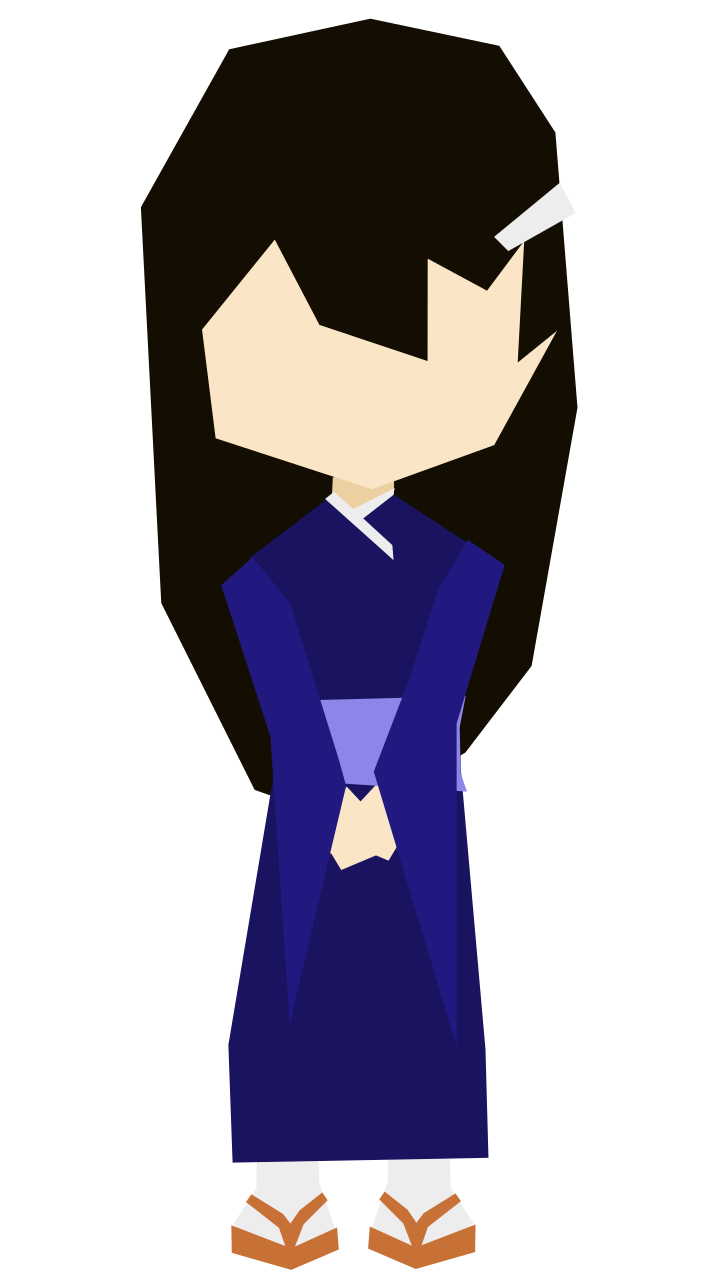
Human
Creature Type: Humanoid
Size: Medium (about 4–7 feet tall) or Small (about 2–4 feet tall), chosen when you select this species
Speed: 30 feet
As a Human, you have these special traits.
Resourceful. You gain Heroic Inspiration whenever you finish a Long Rest.
Skillful. You gain proficiency in one skill of your choice.
Versatile. You gain an Origin feat of your choice.

Half-phantom
Creature Type: Humanoid
Size: Medium (about 4–7 feet tall) or Small (about 2–4 feet tall), chosen when you select this species.
Speed: 30 feet
Two worlds. You have a separate ghost body, that usually takes form of a formless white phantom that feels warmer than normal phantom on touch. You can control this body with separate speed, as well as feel, hear and see through this phantom body, but cannot talk. This body has stats of a Phantom, but with your Ability Scores and sharing your HP.
Battle form. By spending a Bonus Action you can change the form of your second body. It now copies your physical form, copying all your stats and equipment, and allowing you to attack or cast spells from it’s position. It doesn’t have traits and other benefits of a Phantom while in this form. You can revert it back with Free Action.
Ghostly life. While not being a youkai and looking like humans, you are a lot more long-lived than humans, and your humanoid physical body feel a bit cold on touch.

Hermit
Creature Type: Humanoid
Size: Medium (about 4–7 feet tall) or Small (about 2–4 feet tall), chosen when you select this species
Speed: 30 feet
As a Hermit, you have these special traits.
Resourceful. You gain Heroic Inspiration whenever you finish a Long Rest.
Skillful. You gain proficiency in one skill of your choice.
Hermit Body. You get Proficiency in Constitution saving throws and additional +2 to your Constitution Ability Score, bypassing 20 limit. You can still increase your underlying ability score up to 20 after getting this trait, effectively making a limit of 22.
Near-Immortal. You can live for far longer than normal humans, and you are less likely to die by accident. You won’t die from any form of instant death, instead always going through Death Saving Throws.
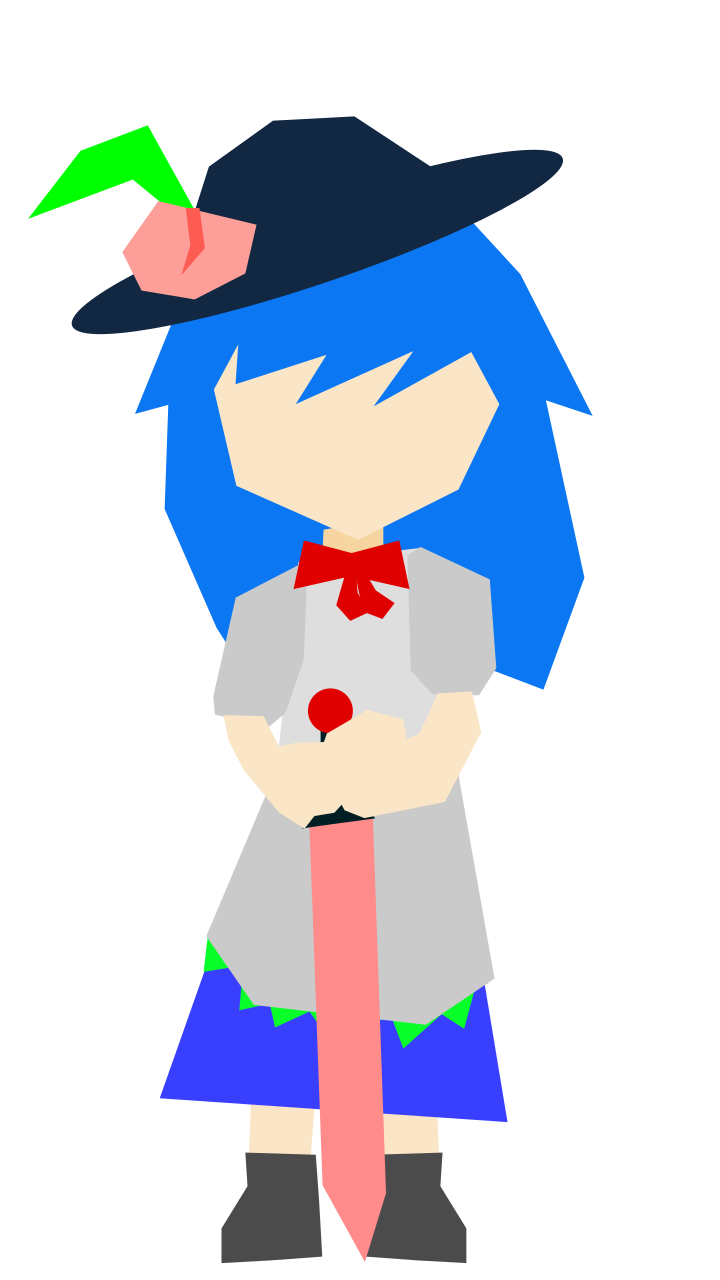
Celestial
Creature Type: Humanoid
Size: Medium (about 4–7 feet tall) or Small (about 2–4 feet tall), chosen when you select this species
Speed: 30 feet
As a Celestial, you have these special traits.
Celestial Body. You get Proficiency in Constitution saving throws and additional +4 to your Constitution Ability Score, bypassing 20 limit. You can still increase your underlying ability score up to 20 after getting this trait, effectively making a limit of 24.
Heavenly Immortal. You can live forever, and you are unlikely to ever die. You won’t die from any form of instant death, instead always going through Death Saving Throws, which you get Advantage for. While you are down, you cannot be attacked or damaged with other means.

Lunarian
Creature Type: Humanoid
Size: Medium (about 4–7 feet tall) or Small (about 2–4 feet tall), chosen when you select this species
Speed: 30 feet
As a Lunarian, you have these special traits.
Skillful. You gain proficiency in one skill of your choice.
Pure. You can theoretically live forever as long as you have a Pure Land Citizen feat. If you started without this feat or if you lost it, this feature doesn’t apply.
Cannot Distinguish from Magic. You gain Magic Initiate (Any) feat and Technology Enthusiast feat.
Youkai

Custom Youkai
Creature Type: Youkai
Size: Medium (about 4–7 feet tall) or Small (about 2–4 feet tall), chosen when you select this species
Speed: 30 feet
As a Youkai, you have these special traits.
Inhuman Capabilities. You get 3 Youkai Feats of your choice.
Youkai Likeness. (Optional rule) Instead of any number of Youkai Feats, you can choose a corresponding number of benefits from any playable Youkai Species.

Youkai Magician
Creature Type: Youkai
Size: Medium (about 4–7 feet tall) or Small (about 2–4 feet tall), chosen when you select this species
Speed: 30 feet
True Magician. (Optional Rule) You must have a Wizard class to use this species
As a Magician, you have these special traits.
Ritual of forgetting food. You don’t need to eat and don’t age. Also Poison damage cannot reduce your HP to 0, if it does, it instead reduces to 1, without making you Unconscious.
Extending limits. You get +2 to your Intelligence ability score limit (but not ability score itself).
Skillful. You gain proficiency in one skill of your choice.
Versatile. You gain an Origin feat of your choice.
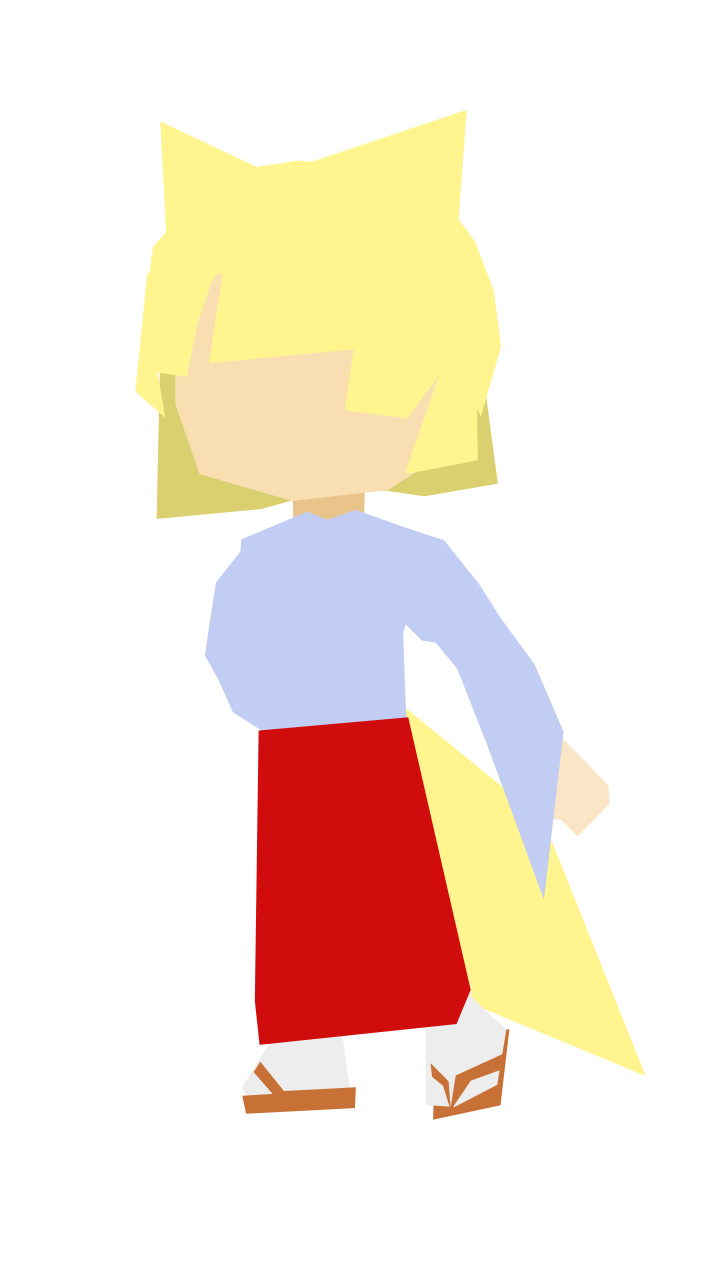
Kitsune
Creature Type: Youkai
Size: Medium (about 4–7 feet tall) or Small (about 2–4 feet tall), chosen when you select this species
Speed: 30 feet
As a Kitsune, you have these special traits.
Transformation. You can cast Disguise Self without spell slots and components.
Animal form. You can change your form into small Kitsune (fox) animal. This form keeps your HP, Ability Score, and Skills.
Kitsune tricks. You know Dancing Lights, Minor Illusion, and Prestidigitation cantrips.

Tanuki
Creature Type: Youkai
Size: Medium (about 4–7 feet tall) or Small (about 2–4 feet tall), chosen when you select this species
Speed: 30 feet
As a Tanuki, you have these special traits.
Disguise. You can cast Disguise Self without spell slots and components.
Animal form. You can change your form into small Tanuki (raccoon-dog) animal. This form keeps your HP, Ability Score, and Skills.
Tanuki tricks. You can change form of a Tiny item, changing it’s function to closely resemble what you want. You can create attacks (1d6 + Charisma at best) and convincing trinkets using this, but not Magic Items or items bigger than Tiny. Items can be revealed as fake, using rules of Minor Illusion. You can keep a number of transformations active at the same time, up to your Proficiency Bonus.

Oni
Creature Type: Youkai, Fiend
Size: Medium (about 4–7 feet tall) or Small (about 2–4 feet tall), chosen when you select this species
Speed: 30 feet
As an Oni, you have these special traits.
Sturdy Lotus Eater. You get Advantages in any Constitution saving throws.
Raw power. You get additional +2 to your Strength Ability Score, bypassing 20 limit. You can still increase your underlying ability score up to 20 after getting this trait, effectively making a limit of 22.
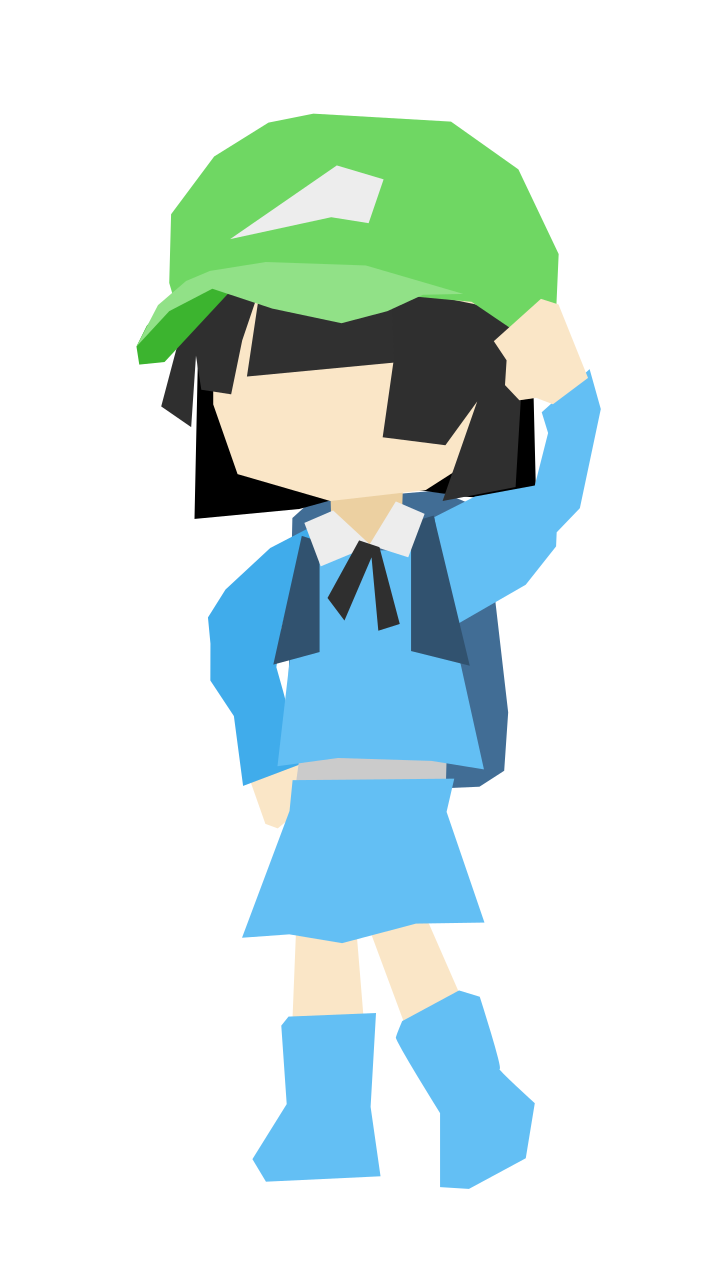
Kappa
Creature Type: Youkai
Size: Small (about 2–4 feet tall)
Speed: 30 feet
As a Kappa, you have these special traits.
Child of water. Gain swimming speed same as base speed, gain ability to breathe underwater.
Hard-working Genius. You get Technology Enthusiast feat.
Hindered Teamwork. You are not great at teamwork. Get Disadvantage every time you try to help or are helped when using Craftsmanship Tools.
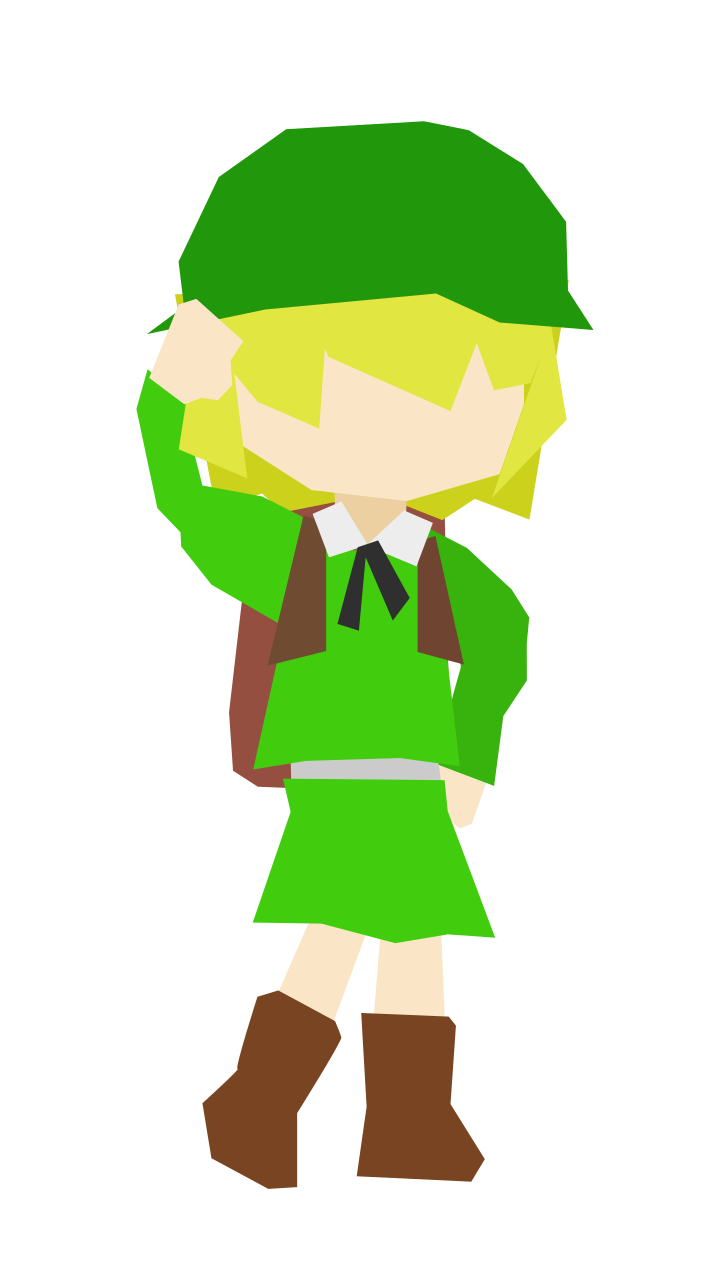
Yamawaro
Creature Type: Youkai
Size: Small (about 2–4 feet tall)
Speed: 30 feet
As a Yamawaro, you have these special traits.
Fish out of water. You need to submerge into water at least once a day, or you get a level of Exhaustion that won’t disappear until you do.
Manipulation of Qi. You can manipulate the living energy of the forest, to get advantage in Survival, Animal Handling, Medicine, or Nature skill checks. You can use it a number of times that equals your proficiency bonus, uses are restored on Long Rest.
Hard-working Genius. You get Technology Enthusiast feat.
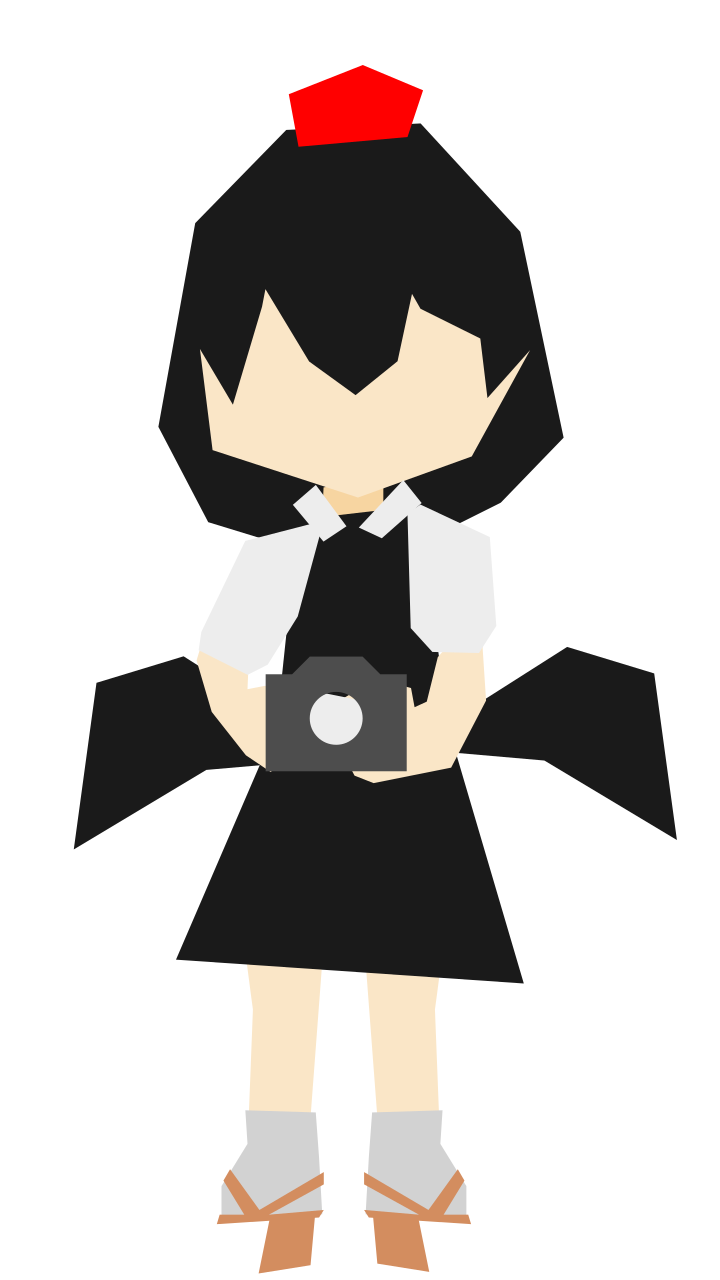
Crow Tengu
Creature Type: Youkai
Size: Medium (about 4–7 feet tall)
Speed: 30 feet
As a Crow Tengu, you have these special traits.
Great Perception. You get proficiency in Perception skill.
Flight. You get a 45 feet flight speed.
Wind control. On level 3, you get Gust of Wind spell you can use once a long rest. You also know Elementalism cantrip, but only limited to “Beckon Air”.

White Wolf Tengu
Creature Type: Youkai
Size: Medium (about 4–7 feet tall)
Speed: 35 feet
As a Wolf Tengu, you have these special traits.
Great Perception. You get proficiency in Perception skill.
Wolf jump. Your jump height and width is doubled, you get Climbing Speed same as your base speed.
Pack Tactics. You get an Advantage attacking enemies that have at least one of your allies in 5 feet radius from them
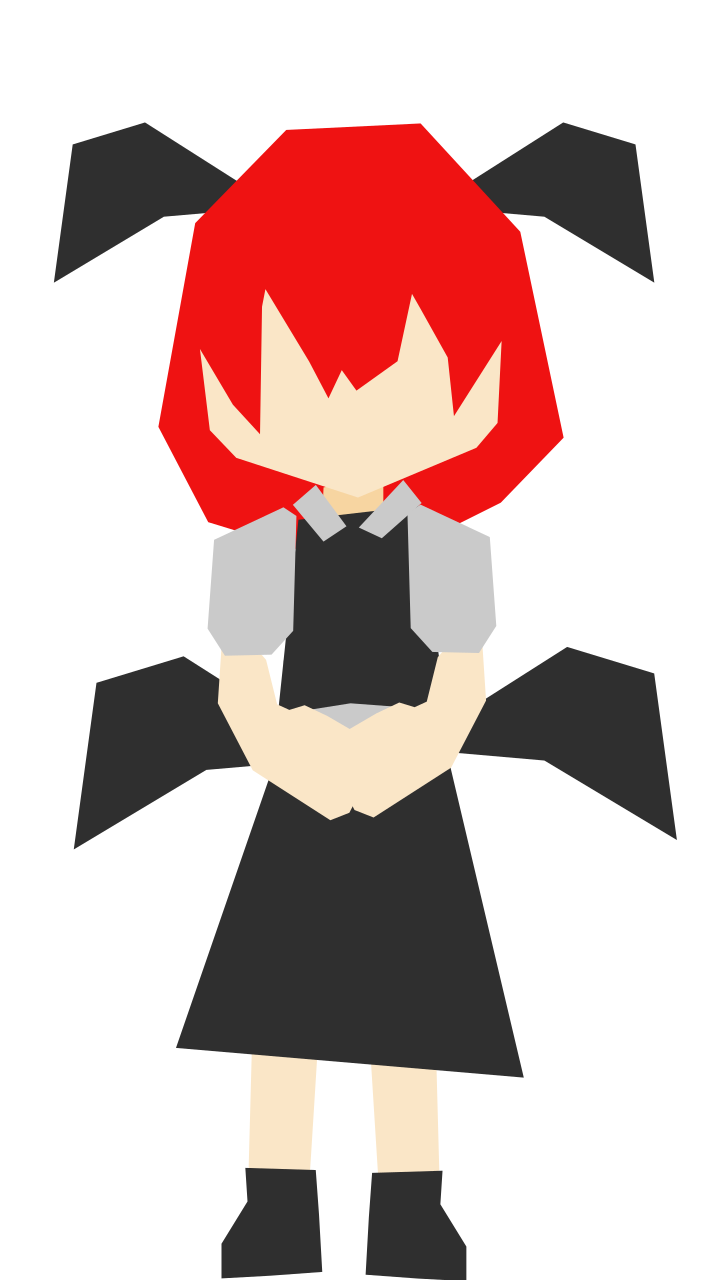
Small Devil
Creature Type: Fiend/Youkai
Size: Medium (about 4–7 feet tall) or Small (about 2–4 feet tall), chosen when you select this species
Speed: 30 feet
As a Devil, you have these special traits.
Wings of Night. You get a flight speed that equals your base speed.
Devilish Charm. You can spend Action try to Charm a creature that sees and hears you by making it make a Wisdom saving throw against your Charisma-based difficulty. If failed, target Creature gets Charmed effect for 1 hour. After you tried charming that creature, you cannot do that again until next Long Rest, regardless of success.
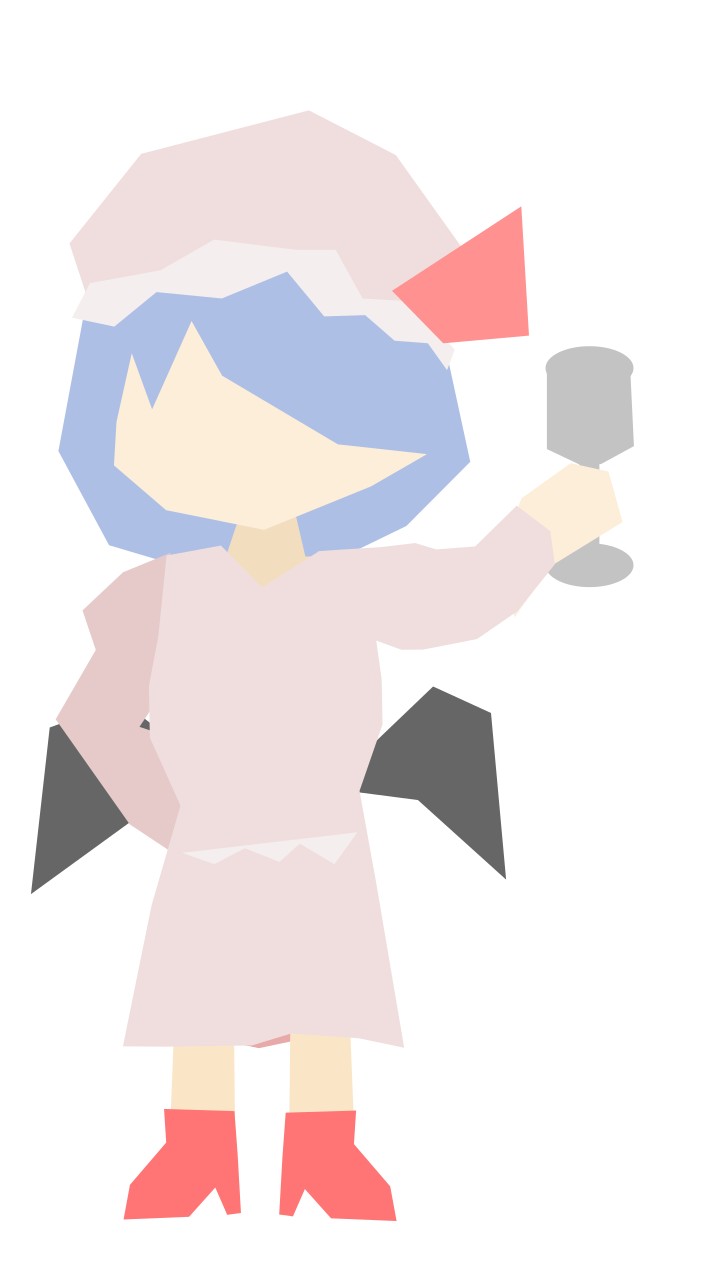
Vampire
Creature Type: Fiend/Youkai/Undead
Size: Medium (about 4–7 feet tall) or Small (about 2–4 feet tall), chosen when you select this species
Speed: 45 feet
As a Vampire, you have these special traits.
Wings of Night. You get a flight speed that equals your base speed.
Devilish Charm. You can spend Action try to Charm a creature that sees and hears you by making it make a Wisdom saving throw against Charisma-based difficulty. If failed, target Creature gets Charmed effect for 1 hour. After you tried charming that creature, you cannot do that again until next Long Rest, regardless of success.
Painful Sunlight. You have Radiant damage weakness, and if you are on the direct or bright reflected sunlight, you get effects of one Exhaustion until you stop being in sun (you can use a parasol or hide in shadow).
Painful Water. You cannot cross running water (water-based attack or barrier, or heavy rain), if you try, your speed will become 0 for this turn, and you will take 1 true damage.
Vampire’s teeth. You have vampire teeth, that work as natural weapon with 1d4 + DEX damage and you can heal yourself by the amount of damage you made with this weapon if your target is a human or an animal.
Cloud of Bats. Starting from Level 3, you can spend a Bonus Action to turn into a pack of bats that can fly through small spaces like bars, as well as avoid provoking attacks. You turn back before your turn end, or at your will as Free Action.

Earth Rabbit
Creature Type: Youkai
Size: Small (about 2–4 feet tall)
Speed: 30 feet
As a Earth Rabbit, you have these special traits.
Lucky Paws. You can get Advantage on any dice roll, once per Long Rest.
Strike in sync. At the start of a battle, you can choose to change your Initiative to one of your teammates or allies.
Hole Expert. You get Advantage on skill checks to find traps and secret passages.

Moon Rabbit
Creature Type: Youkai
Size: Medium (about 4–7 feet tall)
Speed: 30 feet
As a Lunar Rabbit, you have these special traits.
Ear to ear. You are capable of long-range communication with other Moon Rabbits. Range of this communication is large, but depends of amount of interference and obstacles, without those it can easily allow Moon-Earth communication. You can also send and receive radio waves using this ability, though the range is more limited. (specific distance for this ability at specific moment is decided by the game master)
Finger gun. You can do a ranged attack using a free hand, with 1d6 + DEX damage.
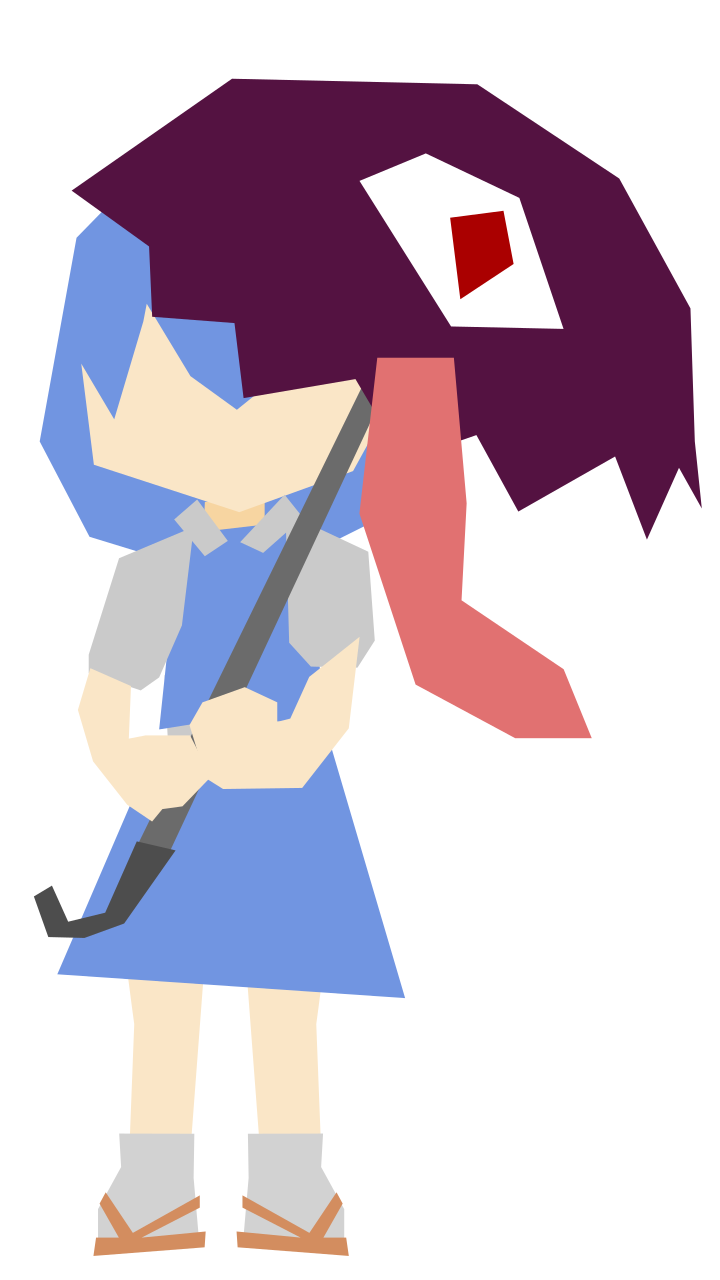
Tsukumogami
Creature Type: Youkai
Size: Medium (about 4–7 feet tall) or Small (about 2–4 feet tall), chosen when you select this species. Your object is Tiny or Small.
Speed: 30 feet
Spirit of tool. A part of your body is an non-magic item you inhabited before turning into youkai. Item can be a part of your body or separate, and you can use it for it’s original purpose. If item is separate, it can be used to cast spells from it’s position. Item shares HP with you.
Usefulness. You get a Tool proficiency.
Flight. You and your object get a flight speed of 30 feet.
Mystical Item. You get a Magic Initiate (Any) feat.
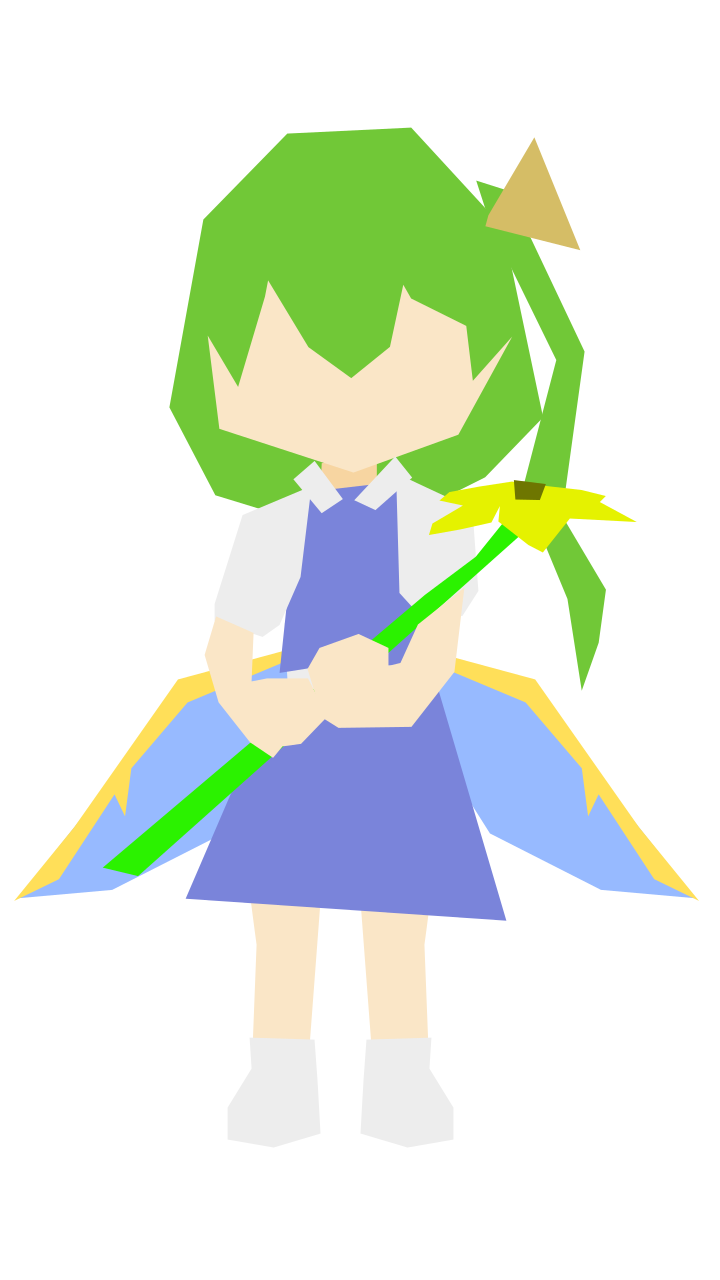
Great Fairy
Creature Type: Fey
Size: Small (about 2–4 feet tall)
Speed: 25 feet
As a Fairy, you have these special traits.
Immortal creatures. You can’t die (but can get knocked out), don’t age, don’t need to eat (even though you can). You ability to remember past is limited, old memories being vague and you can misremember even recent memories.
Fairy wings. You have a flight speed equal to your base speed.
Power on Nature. You can add an additional bonus equaling your Proficiency Bonus to any damage throw with specific damage type you choose on character creation (see table below).
You also get a spell at Level 3 (Use once per Long Rest with Charisma as Spellcasting Ability, also considered a prepared spell of your class).
| Fairy type | Damage type | Level 3 |
|---|---|---|
| Ice Fairy | Cold | Ice Knife |
| Makai Fairy | Fire | Burning hands |
| Hell Fairy | Mental | Hideous Laughter |
| Zombie Fairy | Necrotic | Hex |
| Flower Fairy | Piercing | Misty Step |
| Poisonous Fairy | Poison | Ray of Sickness |
| Fairy of Light | Radiant | Guiding Bolt |
| Animal Fairies | Slashing | Alter Self |
Haniwa
Creature Type: Construct
Size: Medium (about 4–7 feet tall)
Speed: 30 feet
As a Haniwa, you have these special traits.
Ceramic Vessel. You are immune to Frightened, Charmed and Poisoned conditions, and have a resistance to Poison damage. In return, you cannot automatically heal on Short Rest, and non-magical healing and stabilization needs to be replaced with repair. Magical healing works on you.
Terracotta Armor You have base AC of 17.
Expendable Soldier If you die, you can either be restored with creation of new body, or turn into a Vengeful Spirit, replacing your Species Features.

Vengeful Spirit
Creature Type: Undead
Size: Medium (about 4–7 feet tall) or Small (about 2–4 feet tall), chosen when you select this species.
Speed: 30 feet
Incorporeal Movement. You can move through other creatures and objects as if they were Difficult Terrain. You take 5 (1d10) Force damage if you end your turn inside an object.
Thunderous wrath. You can use a Thunderwave spell using Charisma, with proficiency bonus as limit, that resets on a Long Rest. At level 3, you also learn Shatter spell.
Feats
Origin Feats
Occult Specialist
Origin Feat
You gain the following benefits.
Occult Knowledge. You can use your modern knowledge to fight off youkai. You can roll either Intelligence (Arcana or Investigation) or Wisdom (Perception or Insight) skill check at the start of the battle (difficulty is set by master), and if succeeded, immediately know if your enemies are youkai or undead, and if they are, get 3 attack roll advantages against them that you can use during this battle.
ESP Cantrip. You can choose one of following Cantrips to get: Mage Hand, Message, Minor Illusion, True Strike. For those cantrips, your Spellcasting Ability is either Intelligence or Charisma, chosen when you get this ability.
Technology Enthusiast
Origin Feat
You gain the following benefits.
Pseudomagical Item. Any magic you use is actually made using technology or a mix of magic and technology. During a Long Rest, you can spend 2 * (Spell Level + 1) Outside World Trinkets to create a Magic Item that fires a specific spell that you know, and charge it during Short or Long Rest by spending the needed amount of spell slots. Every usage of that item spends a charge, and only you or someone with the technological abilities can charge it.
Pseudomagical Knowledge. You can get Advantage in Intelligence skill checks that are related to Technology. If you don’t know whether they are related to technology, you can claim Advantage anyway, but results will be through the lens of technology, meaning if it isn’t technology, you will know it’s not technology and not much else.
Pure Land Citizen
Origin Feat
You gain the following benefits.
Lifeless Purity. You are mostly clean of mortal world’s impurities and can live in places like Heaven and Lunar Capital. Also, you cannot get ill naturally (poison and magic still works).
Non-presence. You get Advantage to saving rolls and checks made to hide from Divination spells. Divination spells that normally don’t need checks now get 50% chance (1 or 2 on 1d4) to not notice you.
Impurity Collection. Being in lands of mortals, impurities stick on you. After a 24 hours of being in impure land, you lose two other benefits and need to get cleansed by a Cleric (Shrine Maiden) to return them. If you don’t get cleansed in a week, you permanently lose this feat and can get another Origin Feat as a replacement. Spells like Gentle Repose (it can be casted on you despite you not being dead), can stop the collection of impurities temporarily.
Alert
Origin Feat
You gain the following benefits.
Initiative Proficiency. When you roll Initiative, you can add your Proficiency Bonus to the roll.
Initiative Swap. Immediately after you roll Initiative, you can swap your Initiative with the Initiative of one willing ally in the same combat. You can’t make this swap if you or the ally has the Incapacitated condition.
Magic Initiate
Origin Feat
You gain the following benefits.
Two Cantrips. You learn two cantrips of your choice from the Cleric, Druid, or Wizard spell list. Intelligence, Wisdom, or Charisma is your spellcasting ability for this feat’s spells (choose when you select this feat).
Level 1 Spell. Choose a level 1 spell from the same list you selected for this feat’s cantrips. You always have that spell prepared. You can cast it once without a spell slot, and you regain the ability to cast it in that way when you finish a Long Rest. You can also cast the spell using any spell slots you have.
Spell Change. Whenever you gain a new level, you can replace one of the spells you chose for this feat with a different spell of the same level from the chosen spell list.
Repeatable. You can take this feat more than once, but you must choose a different spell list each time.
Savage Attacker
Origin Feat
You’ve trained to deal particularly damaging strikes. Once per turn when you hit a target with a weapon, you can roll the weapon’s damage dice twice and use either roll against the target.
Skilled
Origin Feat
You gain proficiency in any combination of three skills or tools of your choice.
Repeatable. You can take this feat more than once.
Youkai Feats
Creature of the Night
Youkai Feat
You gain the following benefits.
Nightvision. You get Darkvision of 60 Feet (if you already have Darkvision, distance gets added), and +2 bonus to every Wisdom Skill Check made in the dark, but in return you get -2 to every Wisdom Skill Check made in direct sunlight.
Call Darkness. You get a Darkness spell. You always have that spell prepared. You can cast it once without a spell slot, and you regain the ability to cast it that way when you finish a Long Rest. You can also cast the spell using any spell slots you have.
Martial Specialty
Youkai Feat
You gain the following benefits.
Typed Damage You can add an additional proficiency bonus to attack throws with specific damage type chosen when you get this Feat, and you also get resistance to that type of damage.
Sky Adaptation
Youkai Feat
You gain the following benefits.
Flying Being. You get a Flight speed equaling your base speed. If you already have a Flight speed, it gets added.
River Adaptation
Youkai Feat
You gain the following benefits.
Water Creature. You get a Swimming speed equaling your base speed, and you can breathe underwater.
Mountain Adaptation
Youkai Feat
You gain the following benefits.
Mountain Climber. You get a Climbing speed equaling your base speed.
Waterfall Jumper. Your jump height gets doubled.
Youkai History
Youkai Feat
You gain the following benefits.
Friendly Youkai. You always get Advantage in one kind of Charisma or Wisdom Skill Check with one kind of creature (Humanoid, Youkai, Undead). Both kind of check and kind of creature are chosen when you receive this Feat.
General Feats
Change Species
General Feat (Prerequisite: Level 4+, Human, see requirements for different effects)
You gain the following benefits.
Ability Score Increase. Increase any of your score by 1, to a maximum of 20.
Depending on your class and other circumstances, you may change your species to one of listed below. You lose all features of Human Species.
If you are a wizard. You can change into Youkai Magician Species.
If you are a warlock with Oni patron. You can change into Oni Species.
If you got bitten by Vampire. You can change into Vampire Species.
If you are a Monk. You can change into Hermit Species.
If you have died. You can change into Vengeful Spirit Species.
Custom transformation. (Optional) With GM’s approval and a good justification in the story, you can turn into another Species, or ignore requirements.
Kappa exodus
General Feat (Prerequisite: Level 4+, Kappa or Yamawaro)
You gain the following benefits.
New origin. When taking this Feat, you can take another Feat of your choice.
Exodus. You can change your species from Kappa to Yamawaro or vice versa, losing all features of one and gaining all features of another. On any level up, you might reverse this change.
Repeatable. You can take this feat more than once.
Possession
General Feat (Prerequisite: Level 4+, “Incorporeal Movement” feature)
You gain the following benefits.
Ability Score Increase. Increase your Charisma score by 1, to a maximum of 20.
Possession. You can attempt to possess a living creature or a youkai while inside of it, if it loses a Wisdom saving throw with difficulty based on your Charisma. While possessing a creature, it’s HP, ability and spell slots convert into Possession Energy (PE) based on PE Conversion Table.
PE Conversion Table
| Slots | Possession energy | Priority |
|---|---|---|
| 1 HP | +1 | 3 |
| 1 Spell Slot | +1 per level of slot | 2 |
| 1 Ability use | +2 | 1 |
While possessing a creature, you cannot use magic of the body, your own abilities, and magic items, but can use normal attacks using physical Ability Scores and equipment of body. When you are being attacked, you lose PE like HP. Losing all PE makes you leave body.
When you leave body, creature loses HP, Spell Slot and Ability uses corresponding to PE, they are spent based on their priority. Youkai will be knocked out on leaving, and humans won’t be unless they lose all HP, neither will completely die during possession and will be stabilized.
You can only successfully that once per Long Rest. After you failing possession or possession ending, target creature gets immunity to possession for a week.
Ability Score Improvement
General Feat (Prerequisite: Level 4+)
Increase one ability score of your choice by 2, or increase two ability scores of your choice by 1. This feat can’t increase an ability score above 20.
Repeatable. You can take this feat more than once.
Grappler
General Feat (Prerequisite: Level 4+, Strength or Dexterity 13+)
You gain the following benefits.
Ability Score Increase. Increase your Strength or Dexterity score by 1, to a maximum of 20.
Punch and Grab. When you hit a creature with an Unarmed Strike as part of the Attack action on your turn, you can use both the Damage and the Grapple option. You can use this benefit only once per turn.
Attack Advantage. You have Advantage on attack rolls against a creature Grappled by you.
Fast Wrestler. You don’t have to spend extra movement to move a creature Grappled by you if the creature is your size or smaller.
Fighting Styles
Archery
Fighting Style Feat (Prerequisite: Fighting Style Feature)
You gain a +2 bonus to attack rolls you make with Ranged weapons.
Defense
Fighting Style Feat (Prerequisite: Fighting Style Feature)
While you’re wearing Light, Medium, or Heavy armor, you gain a +1 bonus to Armor Class.
Great Weapon Fighting
Fighting Style Feat (Prerequisite: Fighting Style Feature)
When you roll damage for an attack you make with a Melee weapon that you are holding with two hands, you can treat any 1 or 2 on a damage die as a 3. The weapon must have the Two-Handed or Versatile property to gain this benefit.
Two-Weapon Fighting
Fighting Style Feat (Prerequisite: Fighting Style Feature)
When you make an extra attack as a result of using a weapon that has the Light property, you can add your ability modifier to the damage of that attack if you aren’t already adding it to the damage.
Epic Boon Feats
Boon of Combat Prowess
Epic Boon Feat (Prerequisite: Level 19+)
You gain the following benefits.
Ability Score Increase. Increase one ability score of your choice by 1, to a maximum of 30.
Peerless Aim. When you miss with an attack roll, you can hit instead. Once you use this benefit, you can’t use it again until the start of your next turn.
Boon of Dimensional Travel
Epic Boon Feat (Prerequisite: Level 19+)
You gain the following benefits.
Ability Score Increase. Increase one ability score of your choice by 1, to a maximum of 30.
Blink Steps. Immediately after you take the Attack action or the Magic action, you can teleport up to 30 feet to an unoccupied space you can see.
Boon of Fate
Epic Boon Feat (Prerequisite: Level 19+)
You gain the following benefits.
Ability Score Increase. Increase one ability score of your choice by 1, to a maximum of 30.
Improve Fate. When you or another creature within 60 feet of you succeeds on or fails a D20 Test, you can roll 2d4 and apply the total rolled as a bonus or penalty to the d20 roll. Once you use this benefit, you can’t use it again until you roll Initiative or finish a Short or Long Rest.
Boon of Irresistible Offense
Epic Boon Feat (Prerequisite: Level 19+)
You gain the following benefits.
Ability Score Increase. Increase your Strength or Dexterity score by 1, to a maximum of 30.
Overcome Defenses. The Bludgeoning, Piercing, and Slashing damage you deal always ignores Resistance.
Overwhelming Strike. When you roll a 20 on the d20 for an attack roll, you can deal extra damage to the target equal to the ability score increased by this feat. The extra damage’s type is the same as the attack’s type.
Boon of Spell Recall
Epic Boon Feat (Prerequisite: Level 19+, Spellcasting Feature)
You gain the following benefits.
Ability Score Increase. Increase your Intelligence, Wisdom, or Charisma score by 1, to a maximum of 30.
Free Casting. Whenever you cast a spell with a level 1–4 spell slot, roll 1d4. If the number you roll is the same as the slot’s level, the slot isn’t expended.
Boon of the Night Spirit
Epic Boon Feat (Prerequisite: Level 19+)
You gain the following benefits.
Ability Score Increase. Increase one ability score of your choice by 1, to a maximum of 30.
Merge with Shadows. While within Dim Light or Darkness, you can give yourself the Invisible condition as a Bonus Action. The condition ends on you immediately after you take an action, a Bonus Action, or a Reaction.
Shadowy Form. While within Dim Light or Darkness, you have Resistance to all damage except Psychic and Radiant.
Boon of Truesight
Epic Boon Feat (Prerequisite: Level 19+)
You gain the following benefits.
Ability Score Increase. Increase one ability score of your choice by 1, to a maximum of 30.
Truesight. You have Truesight with a range of 60 feet.
Equipment is meant to be simplified as it’s not the focus of Touhou. Because of that some mechanics, like Weight and Ammunition, are intentionally removed, and not many common items are described.
It’s recommended for GM to improvise items and prices depending on location.
Otherwise, check SRD for any missing information or item (adapting prices to 100¥ = 100 CP = 1 GP if needed).
Equipment
Coins
Characters often find currencies on their adventures and can spend those coins in settlements. They come in different denominations, but Copper Mon and modern Japanese Yen are the most popular and considered the same value.
See Coin Values table for all denominations, as well as intended conversion into SRD money.
GM can decide whether currencies may be automatically converted into Yen.
Table: Coin Values
| Gensokyo Currency | Value in Yen | SRD Coin | Value in GP |
|---|---|---|---|
| Copper Mon (C) | 1 | Copper Piece (CP) | 1/100 |
| Yen (¥) | 1 | Copper Piece (CP) | 1/100 |
| Yamawaro Cash | 10 | Silver Piece (SP) | 1/10 |
| Gold Koban | 100 | Gold Piece (SP) | 1 |
| Gold Ichububan | 25 | — | 1/4 |
| American dollar ($) | 1000 | Platinum Piece (PP) | 10 |
Prices may not look quite realistic for modern Yen, but it can be explained by the fact that supply of money is limited in Gensokyo due to most of it coming from Outside World on accident.
Weapons
This list in non-exhaustive and is mostly used to rename some items.
Table: Simple Melee Weapons
| Name | Damage | Properties | Mastery | Cost |
|---|---|---|---|---|
| Club | 1d4 Bludgeoning | Light | Slow | 10 ¥ |
| Dagger | 1d4 Piercing | Finesse, Light, Thrown (Range 20/60) | Nick | 200 ¥ |
| Kunai | 1d4 Piercing | Finesse, Light, Thrown (Range 20/60) | Nick | 200 ¥ |
| Quarterstaff | 1d6 Bludgeoning | Versatile (1d8) | Topple | 20 ¥ |
Table: Simple Ranged Weapons
| Name | Damage | Properties | Mastery | Cost |
|---|---|---|---|---|
| Needles | 1d4 Piercing | Finesse, Thrown (Range 30/60) | Slow | 200 ¥ |
Table: Martial Melee Weapons
| Name | Damage | Properties | Mastery | Cost |
|---|---|---|---|---|
| Glaive | 1d10 Slashing | Heavy, Reach, Two-Handed | Graze | 2000 ¥ |
| Halberd | 1d10 Slashing | Heavy, Reach, Two-Handed | Cleave | 2000 ¥ |
| Heavy Fascine Knife | 1d12 Slashing | Heavy, Two-Handed | Cleave | 3000 ¥ |
| Katana | 1d8 Slashing | Versatile (1d10) | Sap | 1500 ¥ |
| Tengu Sword | 1d8 Slashing | Versatile (1d10) | Sap | 1500 ¥ |
| Rapier | 1d8 Piercing | Finesse | Vex | 2500 ¥ |
| Wakizashi | 1d6 Slashing | Finesse, Light | Vex | 1000 ¥ |
There are few Martial Ranged weapons as Magic Items in addition to SRD’s default martial and simple ranged weapons
Armor
Armor is not very popular in Gensokyo, with preference being placed on spells and mobility. See Armor Class for new calculation that will mostly bypass the need for normal armor for player character, though armor may be reintroduced by GM as normal items from SRD or as magical items.
Table: Shield (Utilize Action to Don or Doff)
| Armor | Armor Class (AC) | Strength | Stealth | Cost |
|---|---|---|---|---|
| Tengu Shield | +2 | — | — | 4000 ¥ |
Adventuring Gear
This list in non-exhaustive and is mostly used to adapt prices and add few holy symbols.
| Gear | Cost |
|---|---|
| Book | 2500 ¥ |
| Outside World Trinket | — |
| Umbrella (Oil-Paper) | 500 ¥ |
| Umbrella (Fancy) | 1000 ¥ |
Outside World Trinket
Gensokyo gets many items from Outside World, forgotten. Their usefulness varies, but they can fetch for a reasonable price with certain buyers, as well as can be a useful material to anyone who knows their way with technology.
Most such trinkets appear in Gensokyo due to being forgotten or considered non-existent. As such, most items come here with big delay and are pretty old (from the Outside World’s point of view).
Umbrella
Umbrellas may sound pretty uninteresting, but it’s essential for night-dwelling youkai to wander during the day, and is a very important accessory to a lady. Oil-paper umbrellas work as a shade, while fancy umbrella (modern or at least western) may be fit for both shade and rain.
There is also a spellcasting focus that works as an umbrella.
Arcane Focus (Varies)
An Arcane Focus takes one of the forms in the Arcane Focuses table and is bejeweled or carved to channel arcane magic. A Sorcerer, Warlock, or Wizard can use such an item as a Spellcasting Focus.
Table: Arcane Focuses
| Focus | Cost |
|---|---|
| Crystal | 1000 ¥ |
| Orb | 2000 ¥ |
| Rod | 1000 ¥ |
| Staff (also a Quarterstaff) | 500 ¥ |
| Wand | 1000 ¥ |
| Magic Umbrella | 1500 ¥ |
Druidic Focus (Varies)
A Druidic Focus takes one of the forms in the Druidic Focuses table and is carved, tied with ribbon, or painted to channel primal magic. A Druid or Ranger can use such an object as a Spellcasting Focus.
Table: Druidic Focuses
| Focus | Cost |
|---|---|
| Sprig of mistletoe | 100 ¥ |
| Wooden staff (also a Quarterstaff) | 500 ¥ |
| Yew wand | 1000 ¥ |
| Tanuki leaf bag | 100 ¥ |
Holy Symbol (Varies)
A Holy Symbol takes one of the forms in the Holy Symbol table and is bejeweled or painted to channel divine magic. A Cleric or Paladin can use a Holy Symbol as a Spellcasting Focus.
The table indicates whether a Holy Symbol needs to be held, worn, or borne on fabric (such as a tabard or banner) or a Shield.
Table: Holy Symbols
| Symbol | Cost |
|---|---|
| Amulet (worn or held) | 500 ¥ |
| Emblem (borne on fabric or a Shield) | 500 ¥ |
| Reliquary (held) | 500 ¥ |
| Gohei (held, also a Club) | 600 ¥ |
Musical Instrument (Varies)
Ability: Charisma
Utilize: Play a known tune (DC 10), or improvise a song (DC 15)
Variants:
- Eastern: Biwa (2000 ¥), koto (2000 ¥), taiko drum (600 ¥), suzu (staff with bells, 600 ¥), kokiriko (100 ¥), gong (1500 ¥)
- Western: Bagpipes (3000 ¥), drum (600 ¥), dulcimer (2500 ¥), flute (200 ¥), horn (300 ¥), lute (3500 ¥), lyre (3000 ¥), pan flute (1200 ¥), shawm (200 ¥), viol (3000 ¥)
Spells
Cantrips
Thin Ray
Evocation Cantrip (Sorcerer, Wizard)
Casting Time: Action
Range: 120 feet
Components: V, S
Duration: Instantaneous
You direct a small condensed ray of light at a creature or an object within range. Make a ranged spell attack against the target. On a hit, the target takes 1d10 Radiant damage.
Cantrip Upgrade. The damage increases by 1d10 when you reach levels 5 (2d10), 11 (3d10), and 17 (4d10).
Level 1
Demonic Strengthening
Level 1 Transmutation (Sorcerer, Wizard, Warlock)
Casting Time: Action
Range: Self
Components: V, S, M (Bead from jade necklace)
Duration: 2 Minutes
For duration of spell, you can substitute Strength Ability Score with Score of your spellcasting Ability.
(With higher spell slots) If Spell Level is above 1, spell’s duration is Power of 2 with exponent being Level minutes, and substituted Strength gets +1 to Score for each for each Spell Level above 1.
Level 2
Icicle Fall
Level 2 Evocation (Sorcerer, Wizard)
Casting Time: Action
Range: 60 feet
Components: V, S
Duration: Instantaneous
You create numerous shards of ice behind you and direct them to a 60x60 feet cube in front of you. Each creature in that cube makes a Dexterity saving throw, taking 3d6 Cold damage and 1d8 Piercing damage on a failed save or 1d6 Piercing damage on a successful save.
A 5 ft. cone right in front of you is a blind spot for this spell, where it’s treated like creature is outside of the spell’s radius.
Level 3
Magic Cannon
Level 3 Evocation (Sorcerer, Wizard)
Casting Time: Action
Range: 150 feet
Components: V, S, M (Mini-Hakkero, crystal ball or a magic umbrella)
Duration: Instantaneous
You direct a large colorful laser in a direction of your choice. Each creature in a 15-foot-width Ray makes a Dexterity saving throw, taking 8d8 Radiant damage on a failed save or half as much damage on a successful one.
Using a Higher-Level Spell Slot. The damage increases by 1d8 for each spell slot level above 3.
Master Spark
Level 3 Evocation (Marisa)
Marisa’s Trade Secret. Definitely not just an exact copy of Yuuka’s “Magic Cannon”.
Perfect Freeze
Level 3 Evocation (Sorcerer, Wizard)
Casting Time: Action
Range: 30 feet
Components: V, S
Duration: Instantaneous
Cold is emanating in 30 feet radius (emanation) from you. Each creature in that radius makes a Dexterity saving throw, taking 3d10 Cold damage on failed save and half on successful save, and slowing their speed to half until the end of their next turn.
Completely freezes water in radius of this spell.
Level 4
Non-Directional Laser
Level 4 Evocation (Marisa, Wizard)
Casting Time: Action
Range: 120 feet
Components: V, S, M (Mini-Hakkero, crystal ball or a magic umbrella)
Duration: Instantaneous
You create 4 a large colorful lasers in 4 directions 90 degrees away from each other, and rotate them to cover a large radius. Each creature in 120 Feet Sphere around you needs to make a Dexterity saving throw, taking 4d8 Radiant damage on a failed save or half as much damage on a successful one.
Using a Higher-Level Spell Slot. The damage increases by 1d8 for each spell slot level above 4.
Magic Items
Hakurei Amulet
Simple Ranged Weapon, Common (Consumable)
This is a homing amulet that can be used to attack your foes if you have a Spellcasting Ability defined. It’s attack roll uses your Spell Attack Bonus instead of Ability, and has +2 to Attack roll.
Text on it says “Welcome!” which is a form of cunning trickery.
| Name | Damage | Properties | Mastery |
|---|---|---|---|
| Amulet | 1d4 Force | Thrown (Range 30/60) | Vex |
Yin-Yang Orb
Holy Symbol, Artifact (Requires Cleric Attunement)
Orb made of some sort of crystal, looking like Red and White Taijitu (Yin-Yang symbol).
This is the true Holy Symbol of Hakurei Shrine. It gives 3d10 Force Damage to any Youkai or Fiend that touches it (holds or gets a successful attack with throwing) directly and violently dispels any magic cast by them to hold it (up to Spell Level 5).
It can levitate with speed of 30 feet, create a clones of itself (uses “Recreation” stats), be thrown and attuned user can call it back to levitate towards them with bonus action.
Currently, a communication device of unknown origin is built into it, allowing Yukari Yakumo to listen and talk through it.
It’s also known from a wise turtle that real power of this orb is:
- User can eat sweets and not get fat
- Changing user’s scent
- Turning into a yin-yang-patterned red and white cat
| Name | Damage | Properties | Mastery |
|---|---|---|---|
| Yin-Yang Orb (physical throw) | 1d6 Bludgeoning | Thrown (Range 20/40) | Topple |
Yin-Yang Orb (Recreation)
Holy Symbol, Common (Requires Attunement)
Weaker recreation of Yin-Yang Orb. Can levitate and be thrown, but only causes physical damage.
A communication device can be built into it.
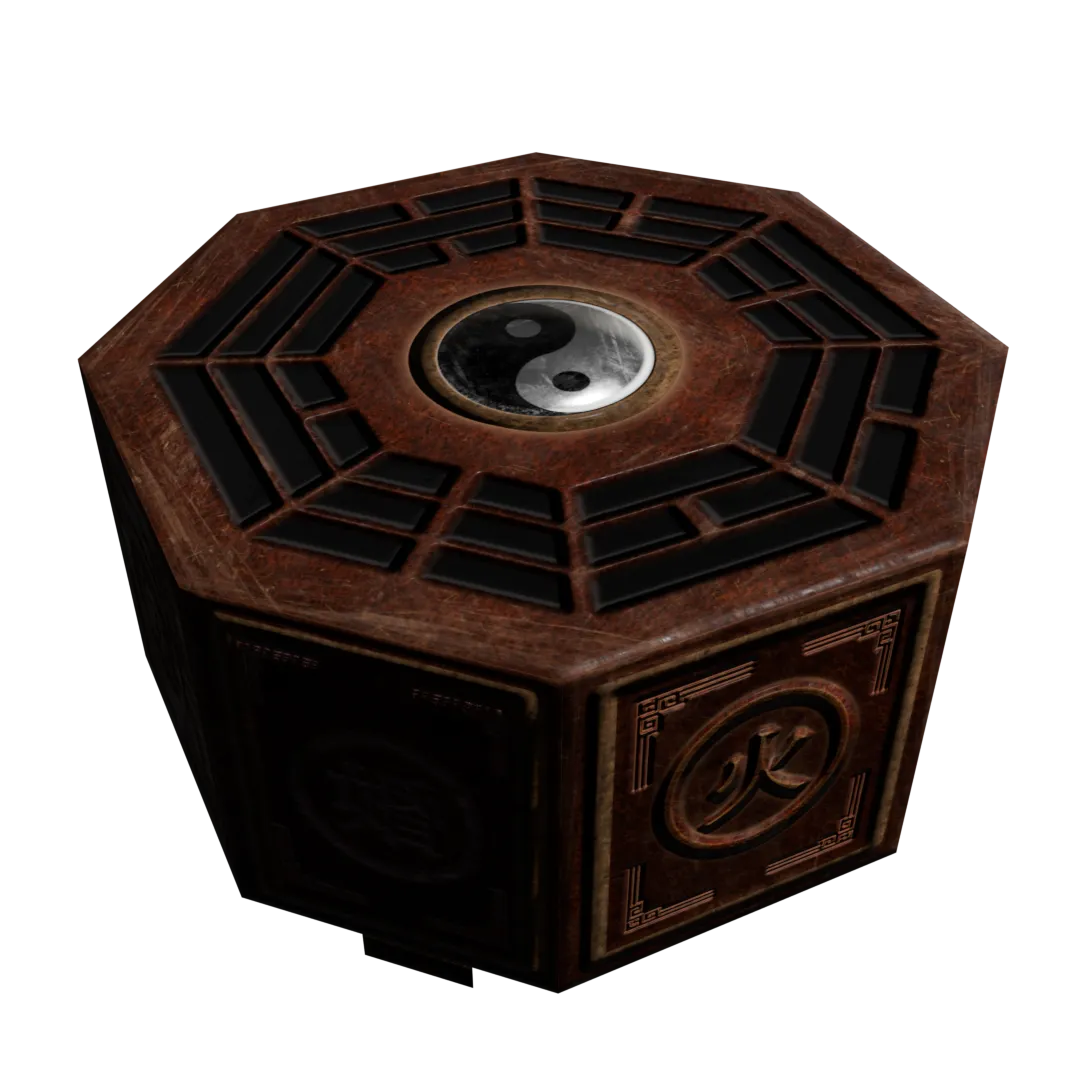
Mini-Hakkero
Arcane Focus, Artifact (Requires Attunement)
This is an Arcane Focus made of a portable technomagical Gas Stove. It allows to cast spells that have Radiant Damage with additional 1d10 Fire Damage and to create small magical fire (works like like Produce Flame but floating on top of Hakkero instead of hand, and capable of igniting and producing heat).
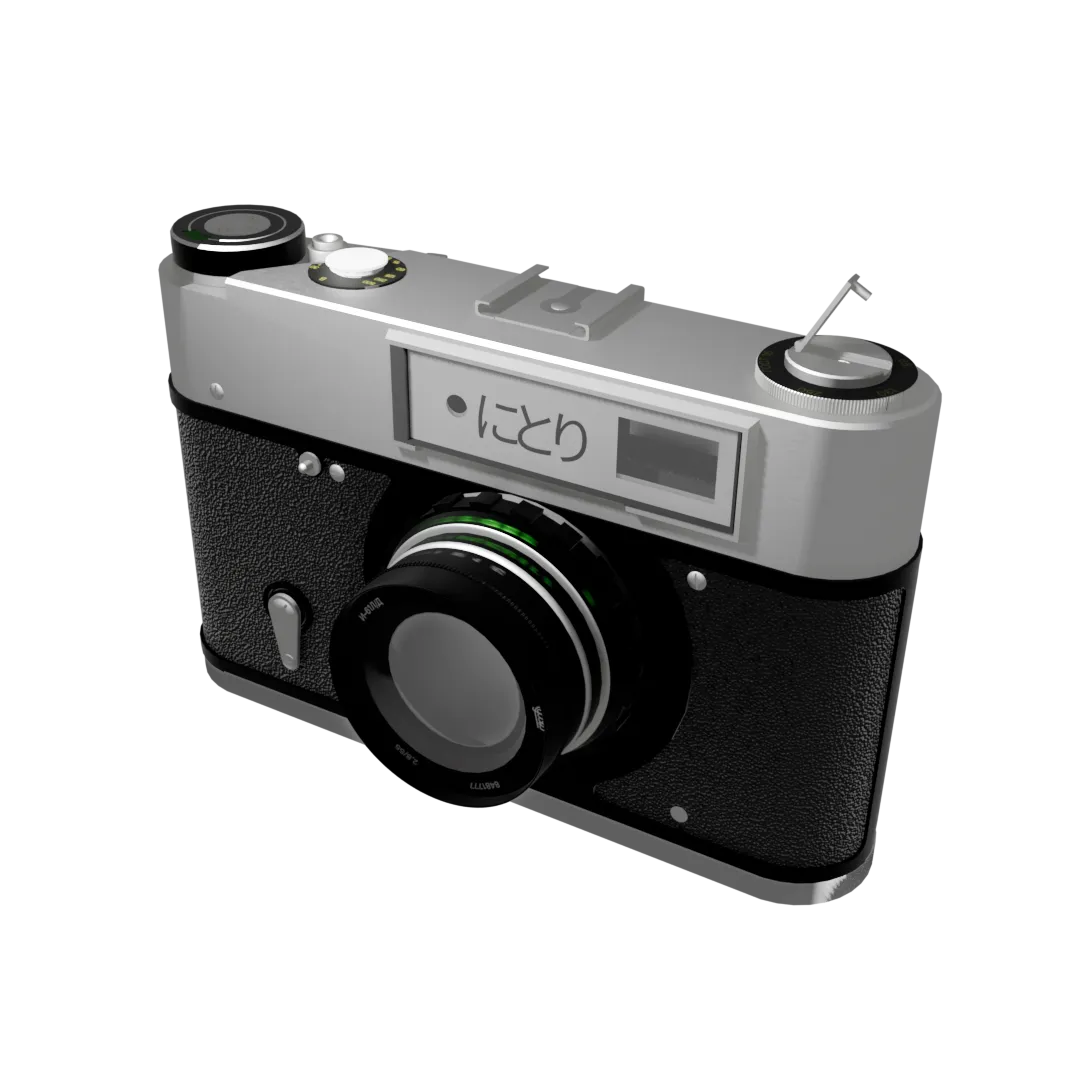
Tengu Camera
Wondrous Item, Uncommon (Requires Attunement)
This is a photo camera, made with magic of photo film. You can use it with Action to get a photo, or Prepare a Reaction to get a photo in the moment of something happening.
You can get a nearly perfect black and white depiction of whatever you see, as long as lighting conditions are good.
This camera needs manual rewinding after every shot. You need to spend Action, then it will be rewound at the start of your next turn.
You can get 10 shots on one film. You can replace film on Short Rest, and render the film into proper images during Long Rest, as long as you have a dark place to do it.
Tengu Fan
Wand, Uncommon
This fan allows you to cast Gust of Wind without slots, verbal, and material components, by spending a charge. This wand has 10 charges, which are restored on the next dawn.
Kappa Device
Varies
This is a device made by Kappa, that can recreate effects of one of few spells:
- Blur (Uncommon) - Optical Camouflage. Has 1 charge that is restored on next dawn. Tiny armor that can be worn on top of other armor or clothes.
- Create or Destroy Water (Common) - A water pump. Relatively large wondrous item, size is Small and needs to be placed on ground to work. It has 2 charges, usually comes with no charges in it. Charges are expended on creation and restored on destruction of water.
- Command (Common) - A very loud loudspeaker. Has 3 charges, that are restored on next dawn. Wondrous item, size is Tiny. Has a side effect that your voice is very loud and can be heard from 300 feet, even if effective range is still 60 feet. Using this will likely make other party aggressive to you.
Sake Bug Vase
Wondrous Item, Rare
This is a vase with a salamander-like youkai, sake bug, inside. This creature can turn water into sake overnight (takes one Long Rest).
Sake from this vase is stronger in alcohol content than normal sake.
Suika Gourd
Wondrous Item, Artifact
This is a gourd that infinitely restores sake after you close and open it again. This sake is created from condensing sake evaporated in this Plane, meaning some sake should exist in this Plane for this gourd to work.
Sake from this gourd is a lot stronger in alcohol content than normal sake.
Hoshiguma Dish
Wondrous Item, Artifact
This is a large red dish for drinking sake, that immediately raises the quality of any alcoholic drink poured into it. One of a kind masterwork of Oni.
Ibaraki Box of a Hundred Medicines
Wondrous Item, Artifact
Specially made shou box (wooden container for drinking sake) with flower patterns on the sides.
Upon drinking any alcoholic drink from it normally, you immediately gain all HP, get 10 temporary HP, and get an Advantage in Strength saving throws and skill checks, and +2 to attack and damage of Strength-based attacks, for 10 minutes. In return, roll Wisdom saving throw against DC 18, if you fail, your Alignment temporarily changes to Chaotic Evil, and your Charisma is reduced to 10 for every effect apart from Intimidation skill checks.
If you drink it while Bloodied (less than half HP), or if you have conditions that would require Greater Restoration to heal, you still regain HP, but you also get effect of Greater Restoration spell being cast on you. If you are a Humanoid, you immediately change your Species to Oni. If you have a condition, that cannot be healed by Greater Restoration despite being severe, you don’t become Oni but can still get Greater Restoration to end one of your other conditions.
Demon Book
Wondrous Item, Varies
This is a book written by Youkai, or a book with Youkai inside.
Simple books written by youkai are Common or Uncommon, one that are Uncommon may have a simple magical effect like a 1-2 Level Spell applied on them.
Books with Youkai inside are rated based on how powerful the youkai inside is. With action or with specific conditions, you can call this youkai in reality.
Laser Pagoda
Holy Symbol, Artifact (Requires Attunement)
This Divine Artifact allows you to cast Disintegrate using Action, at the cost of a gem (at least 10 000 Mon cost). When the ray of this spell hits the ground, it instead creates valuable gems up to 10 times the cost.
Handgun
Martial Ranged Weapon, Rare
This is a rare weapon from Outside World, that has following stats. If you roll “1” on attack, in addition to normal natural 1 consequence it jams and needs an Action to unjam.
| Name | Damage | Properties | Mastery |
|---|---|---|---|
| Handgun | 4d10 Piercing | Ammunition (Range 30/90; Bullet), Reload, Light | Slow |
Makeshift Handgun
Ranged Weapon, Uncommon
This is a uncommon weapon has the same stats as Handgun, but because it’s made out of cheaper parts, such as 3d Printed, it has more chance to jam (natural “2” in addition to “1”), or break (after every use, roll Dexterity (Sleight of Hand) against 10 DC, if you fail, it breaks).
Handgun magazine
Ammunition, Rare (Consumable)
This is a consumable ammunition, 15 bullets for handgun.
Lunar Rifle
Martial Ranged Weapon, Rare
This is an uncommon weapon from Lunar Capital, that has following stats (Both stats are 1 item but two modes of attack, it can be used melee and ranged).
Despite being an Ammunition weapon, it doesn’t actually need ammunition.
| Name | Damage | Properties | Mastery |
|---|---|---|---|
| Lunar Rifle (Shoot) | 2d12 Radiant damage | Ammunition (Range 30/90), Two-handed | Vex |
| Lunar Rifle (Stab) | 1d10 Piercing damage | Reach, Two-handed | Topple |
Bestiary
Generic Enemies

Fairy
Small Fey, Chaotic Neutral
- Armor Class: 13
- Hit Points: 10 (4d4)
- Speed: 15 ft., Fly 25 ft.
- Initiative: +2 (12)
| STAT | SCORE | MOD | SAVE |
|---|---|---|---|
| STR | 7 | -2 | -2 |
| DEX | 14 | +2 | +2 |
| CON | 10 | +0 | +0 |
| INT | 10 | +0 | +0 |
| WIS | 14 | +2 | +2 |
| CHA | 16 | +3 | +3 |
- Skills: Perception +4, History +2
- Senses: Passive Perception 14
- Languages: Common, Fairy, Youkai
- CR 1/2 (XP 100; PB +2)
Traits
Immortal creatures. Fairies can’t die (but can lose HP and get knocked out), don’t age, don’t need to eat (even though they can), as long as they have a home in a plant. Their ability to remember past is limited, old memories being vague and they can misremember even recent events.
Actions
Multiattack. The fairy makes three attacks, using Danmaku or Spells in any combination.
Simple danmaku. Ranged Attack Roll: +4, range 40/160 ft. 1d8 damage (type depends on fairy, Radiant is most common).
Spellcasting. The fairy casts following spells, requiring no spell components and using Charisma as the spellcasting ability:
- At Will: Druidcraft, Dancing lights

Phantom
Small Undead, Neutral
- Armor Class: 11
- Hit Points: 10 (1d12)
- Speed: 5 ft., Fly 30 ft. (hover)
- Initiative: +1 (11)
| STAT | SCORE | MOD | SAVE |
|---|---|---|---|
| STR | 7 | -2 | -2 |
| DEX | 13 | +1 | +3 |
| CON | 10 | +0 | +0 |
| INT | 9 | -1 | -1 |
| WIS | 7 | -2 | -2 |
| CHA | 10 | +0 | +0 |
- Resistances: Bludgeoning, Piercing, Slashing
- Immunities: Poison; Charmed, Exhaustion, Frightened, Grappled, Paralyzed, Petrified, Poisoned, Prone, Restrained
- Senses: darkvision 60 ft.; Passive Perception 11
- CR 1/2 (XP 100; PB +2)
Traits
Incorporeal Movement. The phantom can move through other creatures and objects as if they were Difficult Terrain. It takes 5 (1d10) Force damage if it ends its turn inside an object.
Actions
Multiattack. The phantom makes two Withering Touch attacks.
Withering Touch. Melee Attack Roll: +5, reach 5 ft. 9 (1d10 + 3) Necrotic damage.

Wheel Ghost
Small Construct, Neutral
- Armor Class: 12
- Hit Points: 20 (2d12)
- Speed: Fly 20 ft. (hover)
- Initiative: +1 (11)
| STAT | SCORE | MOD | SAVE |
|---|---|---|---|
| STR | 14 | +2 | +2 |
| DEX | 12 | +1 | +1 |
| CON | 14 | +2 | +2 |
| INT | 2 | -4 | -4 |
| WIS | 2 | -4 | -4 |
| CHA | 2 | -4 | -4 |
- Immunities: Poison; Charmed, Exhaustion, Frightened, Paralyzed, Petrified, Poisoned, Prone
- Senses: Passive Perception 6, Blind Vision 40 ft.
- CR 1/2 (XP 100; PB +2)
Traits
Five Lights. Emits 10 ft. of Dim Light.
Actions
Danmaku. Ranged Attack Roll: +3, distance 30 ft. 5 (1d8) Force damage.
Air Traffic Accident. Melee Attack Roll: +4, reach 5 ft. 8 (1d10 + 2) Bludgeoning damage. This attack automatically activates when Wheel Ghost moves into another creature or object, and Wheel Ghost then ends it’s turn
jimbo
Large Construct, Neutral
Originally just a large nameless Wheel Ghost. Somebody gave it a name. Widely considered the best Touhou Character.
- Armor Class: 14
- Hit Points: 45 (6d10)
- Speed: Fly 20 ft. (hover)
- Initiative: +1 (11)
| STAT | SCORE | MOD | SAVE |
|---|---|---|---|
| STR | 16 | +3 | +3 |
| DEX | 12 | +1 | +1 |
| CON | 16 | +3 | +3 |
| INT | 2 | -4 | -4 |
| WIS | 2 | -4 | -4 |
| CHA | 4 | -3 | -3 |
- Immunities: Poison; Charmed, Exhaustion, Frightened, Paralyzed, Petrified, Poisoned, Prone
- Senses: Passive Perception 6, Blind Vision 40 ft.
- CR 2
Traits
Five Lights. Emits 30 ft. of Dim Light.
Actions
Multiattack. The wheel ghost makes three attacks, using Danmaku.
Danmaku. Ranged Attack Roll: +5, distance 30 ft. 14 (2d10) Force damage.
Air Traffic Accident. Melee Attack Roll: +4, reach 5 ft. 8 (2d10 + 3) Bludgeoning damage. This attack automatically activates when Wheel Ghost moves into another creature or object, and Wheel Ghost then ends it’s turn

Kappa Mob
Small Youkai, Neutral
- Armor Class: 13
- Hit Points: 18 (4d8 + 2)
- Speed: 30 ft., Swim 30 ft.
- Initiative: +2 (12)
| STAT | SCORE | MOD | SAVE |
|---|---|---|---|
| STR | 10 | +0 | +0 |
| DEX | 14 | +2 | +2 |
| CON | 12 | +1 | +1 |
| INT | 16 | +3 | +3 |
| WIS | 14 | +2 | +2 |
| CHA | 12 | +1 | +1 |
- Skills: Perception +4, History +5, Deception +3, Stealth +4, Sleight of hand +4, Arcane +5
- Senses: Passive Perception 12
- Languages: Common, Youkai
- CR 1 (XP 200; PB +2)
Traits
Amphibious. Kappa can breathe air and water.
Hindered Teamwork. Kappas are not great at teamwork. They get disadvantage every time they try to help or are helped when using Craftsmanship Tools.
Actions
Kappa Arm. Melee or Ranged Attack Roll: +5, reach 5 ft. or range 20/60 ft. 10 (1d8 + 5) Bludgeoning damage. Retracts after strike.
Water Gun. Melee or Ranged Attack Roll: +4, range 30/90 ft. 8 (1d6 + 4) Cold damage.

Yamawaro Mob
Small Youkai, Neutral
- Armor Class: 14
- Hit Points: 18 (4d8 + 2)
- Speed: 30 ft.
- Initiative: +2 (12)
| STAT | SCORE | MOD | SAVE |
|---|---|---|---|
| STR | 10 | +0 | +0 |
| DEX | 14 | +2 | +2 |
| CON | 12 | +1 | +1 |
| INT | 16 | +3 | +3 |
| WIS | 14 | +2 | +2 |
| CHA | 16 | +3 | +3 |
- Skills: Perception +4, History +5, Deception +5, Stealth +4, Sleight of hand +4, Arcane +5
- Senses: Passive Perception 12
- Languages: Common, Youkai
- CR 1 (XP 200; PB +2)
Trait
Forest Qi manipulation. They get Advantage in Wisdom Skill Checks while they and the target of their check are in the forest.
Actions
Shuriken. Ranged Attack Roll: +4, range 30/90 ft. 8 (1d6 + 4) Piercing damage.
Named characters
Daiyousei
Small Fey, Chaotic Neutral
Nameless Great Fairy, friend of Cirno.
- Armor Class: 14
- Hit Points: 35
- Speed: 30 ft., Fly 30 ft.
- Initiative: +3 (13)
| STAT | SCORE | MOD | SAVE |
|---|---|---|---|
| STR | 7 | -2 | -2 |
| DEX | 16 | +3 | +3 |
| CON | 10 | +0 | +0 |
| INT | 14 | +2 | +2 |
| WIS | 16 | +3 | +3 |
| CHA | 16 | +3 | +3 |
- Skills: Perception +4, History +2
- Senses: Passive Perception 14
- Languages: Common, Fairy, Youkai
- CR 2
Traits
Immortal creatures. Great Fairies can’t die (but can lose HP and get knocked out), don’t age, don’t need to eat (even though they can. Their ability to remember past is limited, old memories being vague and they can misremember even recent events.
Actions
Multiattack. The fairy makes three attacks, using Danmaku or Spells in any combination.
Kunai danmaku. Ranged Attack Roll: +4, range 40/160 ft. 1d8 Piercing damage.
Spellcasting. The fairy casts following spells, requiring no spell components and using Charisma as the spellcasting ability:
- At Will: Druidcraft, Dancing lights, Misty Step
Spell-Cards
Fairy Sign - “Bouquet of Knives”
Every turn, she casts Misty Step and then immediately uses Multiattack. Continues for 4 turns, considered a Level 3 spell with Concentration.

Cirno
Small Fey, Chaotic Neutral
Ice Fairy, living in the Igloo at the coast of Misty Lake. “Eye am the strongest!”
- Armor Class: 14
- Hit Points: 35
- Speed: 30 ft., Fly 30 ft.
- Initiative: +3 (13)
| STAT | SCORE | MOD | SAVE |
|---|---|---|---|
| STR | 14 | +2 | +2 |
| DEX | 16 | +3 | +3 |
| CON | 10 | +0 | +0 |
| INT | 12 | +1 | +1 |
| WIS | 14 | +2 | +2 |
| CHA | 18 | +4 | +4 |
- Skills: Athletics +4
- Senses: Passive Perception 12
- Languages: Common, Fairy, Youkai
- CR 3
Traits
Immortal creatures. Great Fairies can’t die (but can lose HP and get knocked out), don’t age, don’t need to eat (even though they can. Their ability to remember past is limited, old memories being vague and they can misremember even recent events.
Actions
Multiattack. The fairy makes three attacks, using Danmaku or Spells in any combination.
Ice danmaku. Ranged Attack Roll: +5, range 40/160 ft. 1d10 Cold damage.
Spellcasting. The fairy casts following spells, requiring no spell components and using Charisma as the spellcasting ability:
-
At Will: Ray of Frost
-
Once a Day: Wall of Ice, Perfect Freeze, Icicle Fall
Spell-Cards
Ice Sign “Icicle Fall”
Casts Icicle Fall.
Considered the same Spell Card as Hail Sign “Hailstorm” for counting whether it was already cast this battle.
Hail Sign “Hailstorm”
Casts Icicle Fall but without blind spot, requiring Cirno to successfully roll a Intelligence saving throw with 10 DC. If not successful, casts Ice Sign “Icicle Fall” instead.
Considered the same Spell Card as Ice Sign “Icicle Fall” for counting whether it was already cast this battle.
“Perfect Freeze”
Casts Perfect Freeze
Ice Sign “Sword Freezer”
Creates a Huge Sword made of Ice and makes an attack in 15 feet cone, forcing enemies to make a Dexterity Save with 10 DC (it’s too heavy to handle for Cirno) dealing 5d8 Slashing Damage and 1d6 Cold Damage on success or no damage at fail. Considered a Level 3 spell.
Battle Maps
These are maps you may print or add into a virtual tabletop software.
This page is WIP.
Misty Lake Shore (10x13)

Useful Resources
This is a page with resources not included in the add-on, but useful for organizing a campaign based on world of Touhou Project.
Preference is given to free of charge resources and free cultural works.
Tokens
I recommend using Dairi’s alphes-style portraits of characters for your campaign’s tokens. They are allowed for non-commercial use, but not for redistribution.
- https://www.pixiv.net/en/users/4920496/illustrations/東方 - search artist’s official profile.
- Alternatively, search tags
dairi alphes_(style)on imageboard site (like safebooru.org).
- Alternatively, search tags
- Use tool like https://rolladvantage.com/tokenstamp/ to crop portraits into round tokens.
Another option is using pixel sprites by Majstek (https://reale-ly.itch.io/touhou-mini-pack) - Free to use, all Windows-era characters available, non-commercial, sfw usage is allowed.
You can also get portraits from games such as Mystia’s Izakaya or Touhou Puppet Dance Performance, or sprites from Fantasy Maiden Wars series, though I cannot advise on legality of using them (most likely, personal use if you own a copy of the game is fine).
Music
Official music from games and Drama CD releases is a given, but you can also consider:
- https://crescentia.bandcamp.com/music - Orchestral arrangements of Touhou music. 0$+.
CC BY-NC-SA 4.0


- https://ssbbmaster.bandcamp.com/music - Orchestral/Symphonic Metal arrangements. 0$+.
All Rights Reserved. - https://milleoculos.bandcamp.com/music - Soundtracks to some Touhou fangames and experimental tracks (not all are Touhou-related). Various price, some 0$+.
CC BY-NC 4.0 - https://tabletopaudio.com/ - Generic ambiance and music for TTRPGs.
CC BY-NC-ND 4.0
- https://store.steampowered.com/bundle/26151/ - Mystia’s Izakaya OST. A lot of peaceful Touhou-themed music, though it’s pricey, 19,04€ including the game.
All Rights Reserved. - https://store.steampowered.com/bundle/59474/ - Fantasy Maiden Wars OST. 234 Touhou arrangements from an sRPG game. 65,68€ including the game.
All Rights Reserved.
Maps
- https://2minutetabletop.com/gallery/ - Generic TTRPG maps. 0$+.
CC BY-NC 4.0 - https://www.patreon.com/posts/120507908 (requires Patreon login) - Hakurei Shrine map.
All Rights Reserved.
Background illustrations from Touhou fighting games and Touhou Lost Word may be a good replacement for non-battle scenes in online play (again, I cannot advise on legality of using them).
Character Sheet
Currently, there isn’t a separate character sheet to use. Any D&D 5e or D&D 5.5e Character Sheet should do, but here are some recommendations:
- Official character sheets, available to download at https://www.dndbeyond.com/resources/1779-d-d-character-sheets.
- https://charsheet.derikbadman.com/, an open source interactive web character sheet.
- https://longstoryshort.app/, closed source interactive web character sheet with a lot of functionality, but default language is Russian and not everything can be toggled to English.
- Your VTT, such as Roll20, may have a character sheet built in.
Dice Rolls
The following are dice rollers that can send results via webhooks to Discord and Fluxer messengers.
- https://mailbun.codeberg.page/scarlet-dice/ - My simple web dice roller
- https://codeberg.org/mailbun/miriam-dicebox/ - My desktop dice roller
Contributing
If you want to fix a mistake, or if you want to work on what was already publicly decided in issues - You are welcome to just send Pull Requests!
If you want to change rules, or if you don’t know how to use Codeberg, it’s better to first open a suggestion in Issues or via Itch.io forum.
Regardless, please:
- Don’t use Generative AI/LLM software for contributions;
- Try to keep changes consistent with existing contents.
You keep copyright over submitted changes, so feel free yourself to Legal.md and copyright header for edited files (comment reading SPDX-FileCopyrightText: [year] [copyright holder] <[email address]>). By contributing your changes, you license them under license in the header.
To test the static website locally, install mdBooks, run git clone https://codeberg.org/mailbun/touhou-dnd, and run mdbooks serve --open in project directory.
Translations
If you want to contribute translations, easiest way is to use Weblate via https://translate.codeberg.org/projects/touhou-dnd/. Just log in via Codeberg (register if you don’t have a Codeberg account), agree to licensing terms, check Overview for instructions, and start editing. Once maintainers check your translations, they can be added into the next release.
You can also add a new language via Weblate, but there are still manual changes in repository needed for translation to be built automatically, such as adding new language to switcher in theme/index.hbs.
To edit existing translations locally, you need a Gettext-compatible editor, such as PoEdit or Lokalize. Open and change po/XX.po where XX is language code.
For more technical guide, that includes creating new translations, updating against source text and building local changes with mdBooks, see https://github.com/google/mdbook-i18n-helpers/blob/main/i18n-helpers/USAGE.md.
Legal
License
In sources, you can check header comments of any specific file for copyright (credits) and license used, and check
LICENSESfolder for full text.
Text & Assets
Text and assets of this work are available under Creative Commons Attribution NonCommercial 4.0 International License. To use in any derivative work and redistribution:
- Keep your usage non-commercial;
- Credit all authors and relevant third party sources;
- Clearly state changes and don’t claim endorsement.
If you want to use this work commercially, this work is also available under Shanga Attribution 4.0 International License - a custom license that doesn’t have a non-commercial clause, but requires you to follow the terms of Guidelines for Touhou Project Fan Creators, available at https://touhou-project.news/guidelines_en/, while still crediting and stating changes.
Code
Configuration files used to build static website version are under a variety of Free Software licenses.
- Mozilla Public License 2.0 (Keep file under the same license) -
theme/css/variables.css,theme/index.hbs - Apache License 2.0 (Attribution, like MIT) - other configuration/code files
Authors
This project is created by:
- mailbun
mailbun@systemli.org
Third party sources
Touhou Project and related content are created by Team Shanghai Alice. This is a free fan-made project permitted by public guidelines (https://touhou-project.news/guidelines_en/).
This work includes material from the System Reference Document 5.2 (“SRD 5.2”), available at https://www.dndbeyond.com/srd, by Wizards of the Coast LLC. The SRD 5.2 is licensed under the Creative Commons Attribution 4.0 International License, available at https://creativecommons.org/licenses/by/4.0/legalcode.
This work includes material from Markdown conversion of SRD 5.2, available at https://github.com/springbov/dndsrd5.2_markdown, by Seth Henderson (springbov), licensed under the Creative Commons Attribution 4.0 International License, available at https://creativecommons.org/licenses/by/4.0/legalcode.
This work includes unedited render of “Mini Hakkero” (https://sketchfab.com/3d-models/mini-hakkero-eded609b6e514c39bebc863221f0901b) by DHCG, licensed under Creative Commons Attribution (http://creativecommons.org/licenses/by/4.0/).
This work includes edited (edited text on texture) render of “Camera FED-5V” (https://sketchfab.com/3d-models/camera-fed-5v-35794214c74b4198ba11e9612b280863) by Sh0ma, licensed under Creative Commons Attribution (http://creativecommons.org/licenses/by/4.0/).
“Misty Lake” map features “Igloo 2” model (https://sketchfab.com/3d-models/igloo-2-55c55775194c4f39a89884c710859ed6) by dreamerbelow, licensed under Creative Commons Attribution (http://creativecommons.org/licenses/by/4.0/).
“mdBook” software, which is used for export of this work (web and pdf) is made by Rust Project contributors (see list at https://rust-lang.github.io/mdBook/misc/contributors.html) and is licensed under Mozilla Public License 2.0 (https://www.mozilla.org/en-US/MPL/2.0/). This work also includes an edited version of variables.css file, available at https://codeberg.org/mailbun/touhou-dnd/src/branch/main/theme/css/variables.css, and edited version of index.hbs based on work of Comprehensive Rust contributors, see https://codeberg.org/mailbun/touhou-dnd/src/branch/main/theme/index.hbs.
CI/CD workflow for automatic export is adapted from work of Tom Foster (contributor of “continuwuity” project), that was available under Apache 2.0 License (https://www.apache.org/licenses/LICENSE-2.0.html).